
Almost every page that answers this question was written by someone who wants to sell you the filing. That is not a conspiracy, it is just who bothers to write about patents. It does explain what those pages leave out, though, and the first thing they leave out is the honest answer: an idea is the one thing the patent system will not take. It takes an invention, described in enough detail that someone in your field could build it from your paperwork. Getting from the first to the second is most of the work, and this page is about how that is actually done, what it costs in 2026, and how long it takes.
Our articles are still written by humans!
Get human written articles in your Google feed.
The short answer
Write down the specific thing you have built or worked out, not the result you want. Search whether it already exists. Decide whether to file a provisional to fix your date cheaply or go straight to a full application. Prepare four pieces: a specification, at least one claim, drawings and a declaration. File them electronically through Patent Center. Then wait, respond to the rejection that almost certainly arrives, and pay the issue fee if you get an allowance. A US utility patent runs twenty years from the filing date under 35 U.S.C. 154(a)(2), and you keep it alive with three maintenance payments along the way.
The rest of this page is the detail underneath each of those steps, in the order you will meet them.
Why an idea is the one thing you cannot patent
Two sentences of statute do most of the work here. 35 U.S.C. 101 says that whoever invents or discovers any new and useful process, machine, manufacture, or composition of matter, or any new and useful improvement thereof, may obtain a patent. Those four categories are the whole menu. 35 U.S.C. 112(a) then requires the specification to describe the invention, and the manner and process of making and using it, in such full, clear, concise, and exact terms as to enable any person skilled in the art to make and use the same.
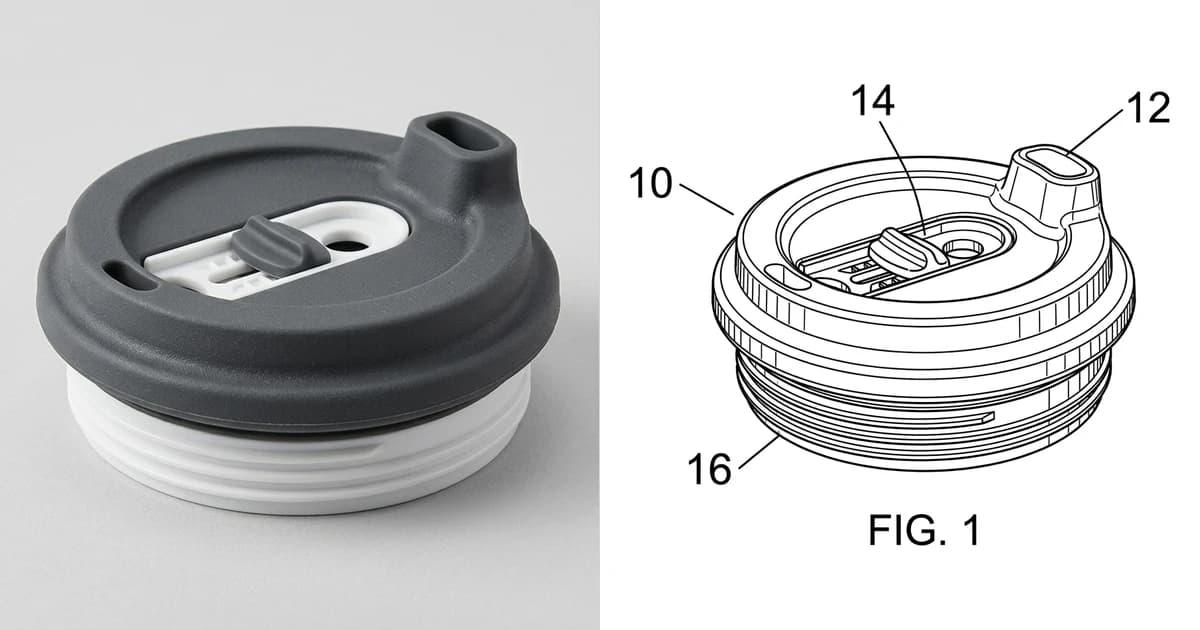
Read those together and the answer falls out. “A cup that keeps coffee hot for six hours” is a goal. It is not a machine or a manufacture, and it enables nobody to build anything. A lid with a specific sealing geometry, a described vacuum wall and a valve that works in a described way is a manufacture, and a competent product engineer could make it from the description. The patent is on the second thing. This is also why courts talk about abstract ideas as unpatentable: not because ideas are unimportant, but because the system trades a monopoly for a teaching, and an idea teaches nobody how to build anything.
The practical version, which is worth more than the legal one: if you cannot hand your description to a competent stranger in your field and have them come back with the thing, you do not yet have an application. You have homework. Most of what an attorney charges for is turning an idea into that kind of description, and most of what an inventor can do to keep the bill down is arriving with the details already worked out.
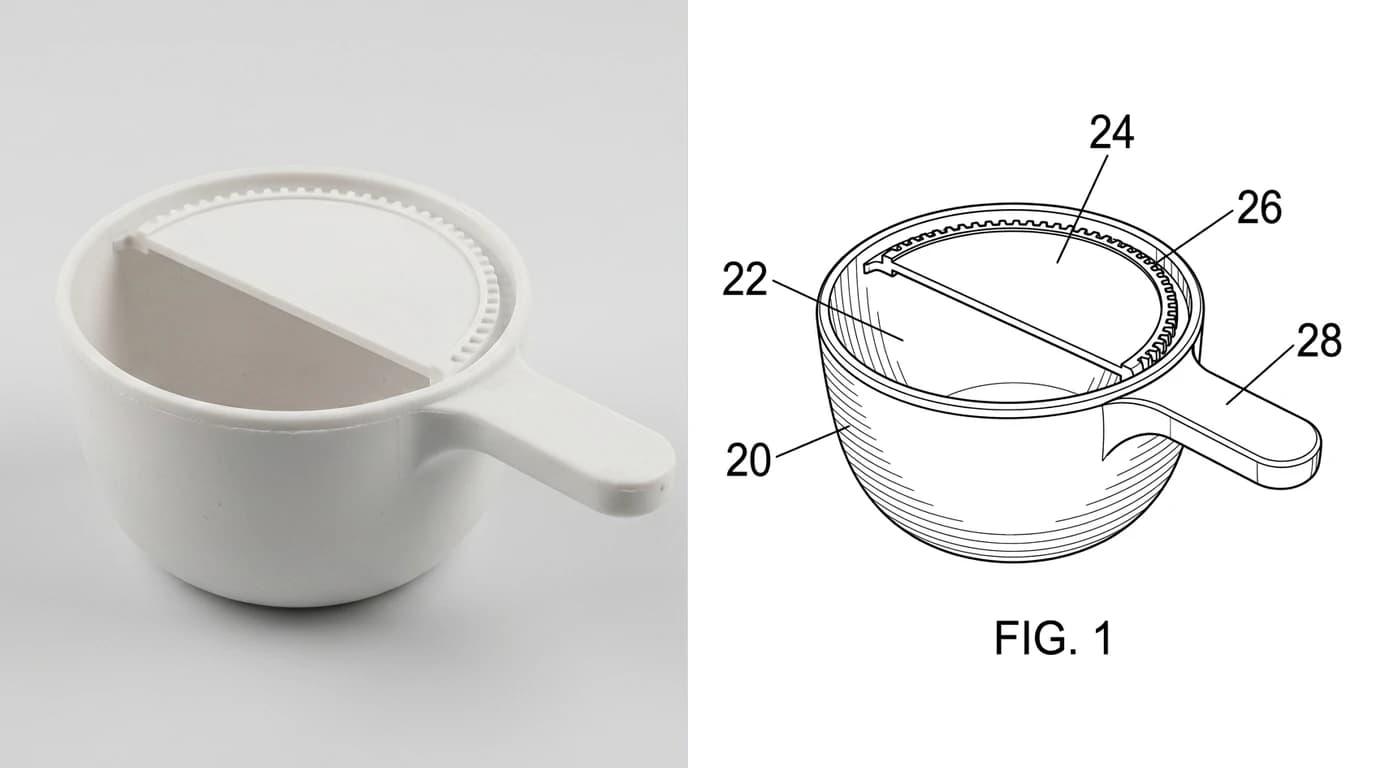
Notice what the figure does and does not carry. There are no dimensions and no title block, which is where people coming from engineering work get caught out. We wrote the detail of that separately in patent drawings from a photo, because the formal rules deserve their own page.
The clock you may already have started
This is the section that changes what people do next, so it comes before the pleasant parts. Under 35 U.S.C. 102(a)(1) an invention is not patentable if it was patented, described in a printed publication, or in public use, on sale, or otherwise available to the public before the effective filing date. Your own launch counts as prior art against you.
The relief is 102(b)(1): a disclosure made one year or less before the effective filing date is not prior art if the disclosure was made by the inventor, or by someone who got the subject matter from the inventor. So in the United States, showing your prototype at a trade show, running a crowdfunding campaign or posting a build video starts a twelve month fuse. It does not end the matter, but the fuse is lit and it does not stop.
While we are here, the other piece of folklore: mailing yourself a sealed envelope, the so-called poor man's patent, does nothing. The first-inventor-to-file provisions of the America Invents Act took effect on 16 March 2013, and what decides priority is the effective filing date of an application at the USPTO. Keep dated records by all means, they are good evidence of your own work, but they are not a filing.
Search before you spend
The cheapest possible outcome is discovering, for free, that your invention was published in 1994. Search is also the step most people skip, partly because it is genuinely hard: patents are written to be broad, so the thing you are looking for is rarely described in your words.
- Patent Public Search is the USPTO's own tool and it searches the full text of US patents and published applications. Search by what the thing does and by its parts, not by your product name.
- Search the classification, not just the words. Find one patent that is genuinely close, note its CPC classification, then read what else lives in that class. This finds the documents your keywords miss.
- Look outside patents too. A YouTube video, an old catalogue or a forum post from 2011 is prior art under 102(a)(1) exactly like a patent is.
- A patent and trademark resource centre will show you how to search properly, in person, for nothing. The librarians there do this every week.
Finding something close is not automatically the end. Patents are granted on improvements, and 101 says so explicitly. What a close hit does is tell you where your claims will have to be narrower, which is information worth having before you pay someone to draft them.
Provisional first, or straight to the real thing
A provisional application is the cheap way to fix a date. It costs $65 as a micro entity, $130 small and $325 undiscounted, it is never examined, and it lets you say patent pending honestly. The USPTO is blunt about the limits: a provisional has a pendency of twelve months from its filing date, the twelve month period cannot be extended, and it becomes abandoned automatically when that period expires.
The trap is in what a provisional actually buys. The later non-provisional only inherits the earlier date for subject matter the provisional supported, in the 112(a) sense of describing it fully enough to enable it. So a two page provisional that describes the concept, with a photo stapled on, will not carry a detailed claim drafted a year later. The USPTO says the quiet part out loud on its own page: some invention promotion firms misuse the provisional application process, leaving the inventor with no patent.
A reasonable rule of thumb. File a provisional when the design is settled enough to describe properly but you need the year to test, tool up or raise money. Go straight to a non-provisional when the design is finished and the year buys you nothing, because the provisional adds twelve months to a timeline that is already long. Either way, write the provisional as though it were the real thing, because in every way that matters later, it is.
What a filing actually contains
A non-provisional utility application is four things, and it is worth knowing which one does what before you pay anyone.
- The specification. The written description of the invention and how to make and use it, meeting 112(a). This is where the detail lives: materials, arrangements, alternatives, how each part relates to the others.
- The claims. One or more claims particularly pointing out and distinctly claiming the subject matter, per 112(b). These are what you own. Everything else supports them. A first independent claim that is too narrow gives away most of the value, and one that is too broad gets rejected over prior art, which is exactly the judgment you are hiring when you hire an attorney.
- The drawings. 35 U.S.C. 113 requires a drawing where necessary for the understanding of the subject matter sought to be patented. For a physical product that means figures, and their formal requirements are set out in 37 CFR 1.84.
- The paperwork. An application data sheet, the inventor's oath or declaration, and your entity status claim if you are taking the small or micro discount.
File it through Patent Center, and file the specification in DOCX. Filing the description, claims and abstract in some other format carries a surcharge of $86 micro, $172 small and $430 undiscounted. Paper filing costs a further $200 on a non-provisional utility application, and that one has no micro entity discount at all.
Where the drawings come from
This is the part of the process we actually work on, so it is the part where we can speak from having built it rather than from having read about it. Two things surprise people.
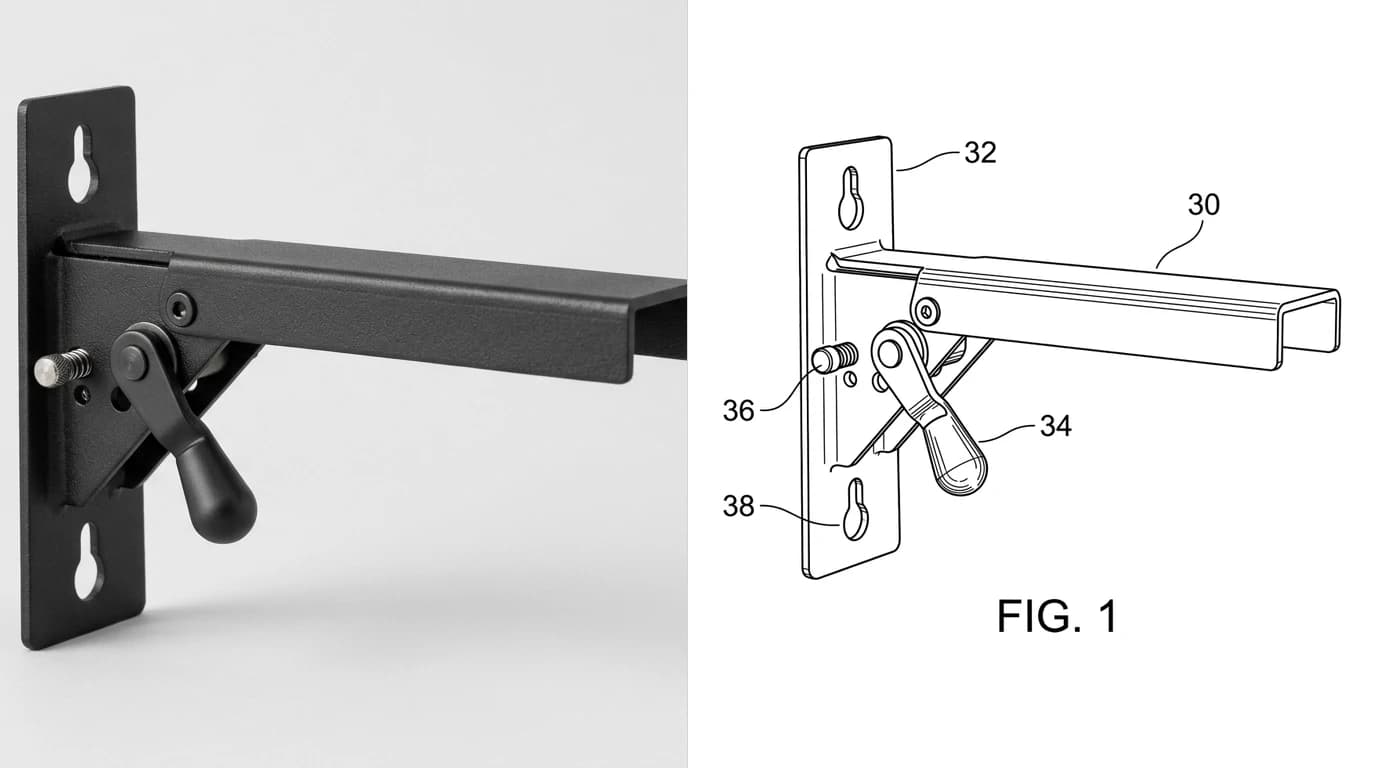
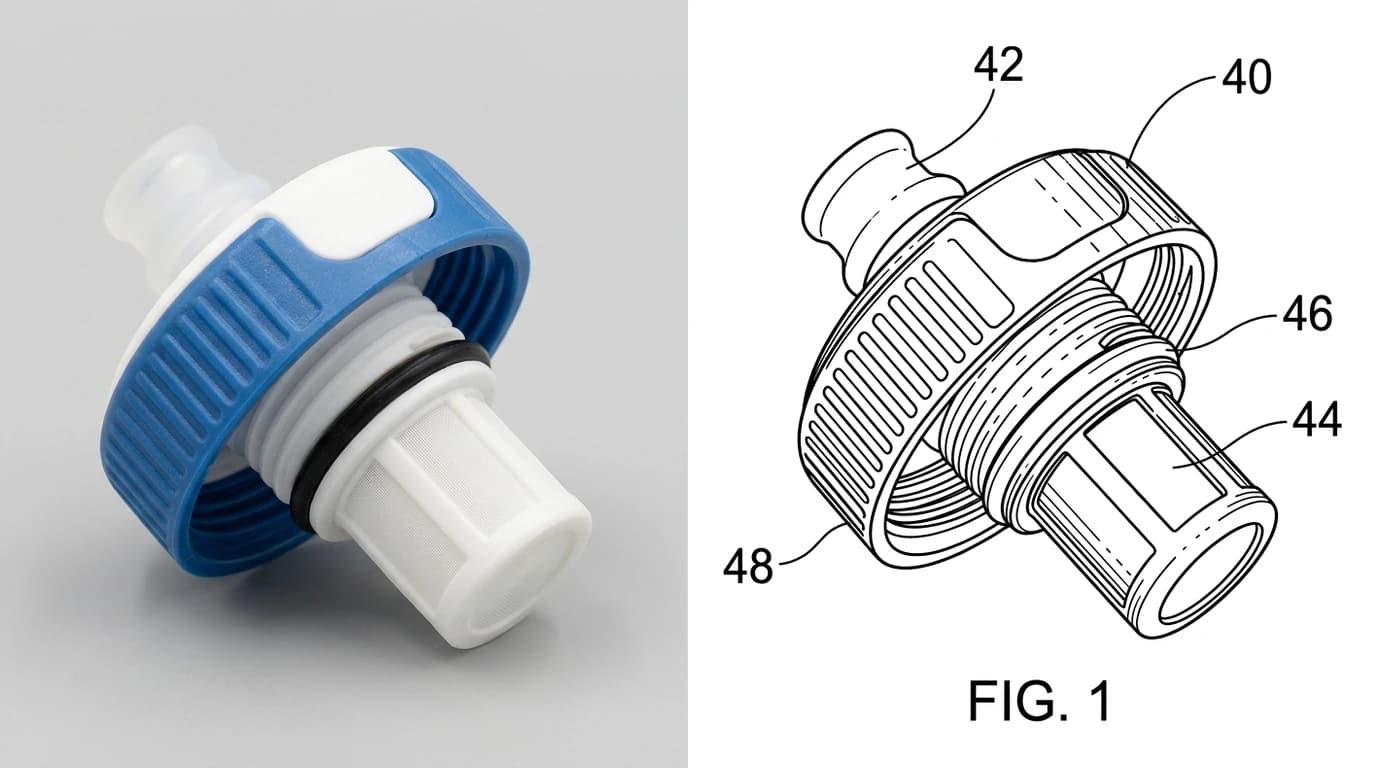
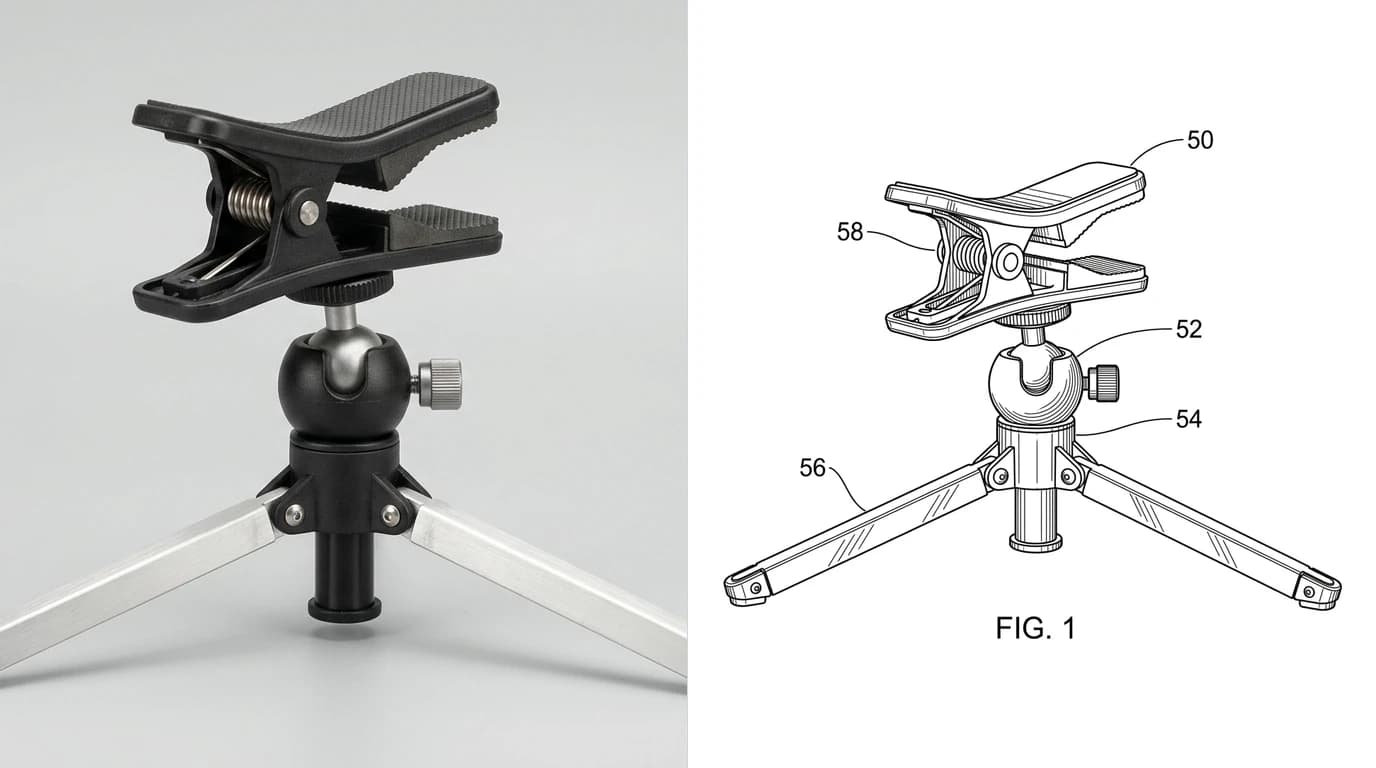
The first is that a patent figure is not an engineering drawing. It carries no dimensions, no tolerances and no title block. It carries numbered views, bare reference numerals on lead lines, and shading only as spaced parallel lines. A CAD sheet exported to PDF and filed as a figure is one of the more reliable ways to collect a drawing objection, and the fix costs a response and a delay. Everything about those rules, including the sheet sizes, the margins and the numeral height, is in our page on patent drawings and 37 CFR 1.84, which is where that detail belongs.
The second is that you do not need CAD files to get figures. Most independent inventors have a prototype and a phone, not a model tree. The workable route is to photograph the prototype cleanly against a plain background, from the angles that show every feature the claims will mention, then have the line figures drawn from those photographs. The same starting point is what our measurements from a photo and photo to manufacturing drawing workflows use, though those produce dimensioned drawings for a shop, which is a different document with a different job.
What it costs in 2026
Here is the part that pages selling filings tend to blur. USPTO fees are published, precise and knowable. Everything below is from the fee schedule effective 19 January 2025, as it stood when we checked it in September 2026.
USPTO fees for a utility application, 2026
Then the patent has to be kept alive. Maintenance fees are due at three and a half, seven and a half and eleven and a half years from grant, and they are the reason plenty of granted patents quietly lapse.
Utility patent maintenance fees, 2026
Claim the discount you are entitled to
The difference between the three columns is large enough to be worth five minutes. A small entity pays 60 percent less and a micro entity 80 percent less than the undiscounted rate. Small entity status covers individuals, non-profits and businesses under the size limits in 37 CFR 1.27. Micro entity status on the gross income basis adds three conditions: no inventor named on more than four previously filed applications, no assignment to anyone over the income limit, and gross income in the preceding calendar year below the current ceiling of $251,190, a figure the USPTO updates roughly every autumn.
The number nobody publishes
Professional fees are the larger part of the bill and there is no official source for them. The standard reference is the AIPLA Report of the Economic Survey, which is paywalled, and we have not read the current edition, so treat the commonly quoted range of roughly $8,000 to $15,000 for drafting and filing a utility application as a market rumour with a good pedigree rather than a fact we can cite. What we can tell you is what moves it: complexity of the technology, how much of the description you arrive with, and how many office actions the application takes to get through.
A design patent is a different, cheaper animal
If what is new is how the product looks rather than how it works, a design patent covers the appearance. Filing, search and examination come to $260 micro, $520 small and $1,300 undiscounted. The term is fifteen years from grant under 35 U.S.C. 173, and design patents carry no maintenance fees at all. The drawings, however, do far more work than in a utility case, because in a design patent the drawings essentially are the claim.
How long it takes
Longer than anyone hopes, and the honest way to answer it is to point you at the live numbers rather than freeze a stale one into a blog post. First action pendency and total pendency are published on the USPTO patents dashboard and both are recalculated every quarter.
What we can date precisely is the queue those averages come out of. On 10 April 2026 the USPTO reported that its inventory of unexamined applications stood at 776,995 as of 6 April, down from a peak of 837,928 in January 2025, and that for the first time in nearly a decade first office actions issued within a fiscal year had overtaken new filings. The direction is good. The absolute number still means your application sits in a queue several hundred thousand deep before an examiner opens it.
Three things change your timeline. A provisional adds up to twelve months at the front, by design. Track One prioritised examination buys you a place near the front for the fee in the table above. And an office action is not a rejection of you personally: most applications get one, the response is normal practice, and each round adds months.
The sequence, start to finish
- Write the embodiment down, not the goal. Parts, how they connect, materials, what varies and what does not. If you have alternatives in mind, write them down too, because they can be worth claim scope later.
- Date your records. They will not win you a priority contest under first-inventor-to-file, but they are evidence of your own development and cost nothing to keep.
- Search. Patent Public Search, then the CPC class of the closest hit, then the non-patent world. Save what you find.
- Work out your entity status before you pay anything, because it decides whether the filing costs $400 or $2,000.
- Decide provisional or non-provisional on whether the twelve months buys you something real.
- Prepare the four pieces: specification, claims, drawings, declaration and application data sheet. Get the figures drawn to 37 CFR 1.84 rather than exporting CAD sheets.
- File in Patent Center, in DOCX, and avoid the surcharges. Keep the receipt with your application number.
- Answer the office action within the period set, then pay the issue fee if you are allowed, and diary the three maintenance dates the day the patent issues.
Free help almost nobody mentions
The pages that rank for this question are selling something, so this section is the one they cannot write. All three of these are run or recognised by the USPTO and cost nothing.
- The Patent Pro Bono Program. A nationwide network of regional programmes that matches volunteer patent attorneys and agents with financially under-resourced inventors and small businesses. The common income test is gross household income under three times the federal poverty guidelines, though regional programmes set their own thresholds. You also have to show you understand the system, typically by having filed a provisional or completed the USPTO's training course, and be able to describe your invention concretely.
- Patent and trademark resource centres. Public libraries with trained staff who will sit with you and teach you to search. This is the cheapest hour in the whole process.
- The law school clinic certification programme. Supervised law students prepare and prosecute real applications for real clients at no charge.
Five ways people lose it
- Showing it first, filing later. The US grace period is twelve months and most other countries have none. A launch is a disclosure.
- A provisional that describes the ambition. It only carries forward what it actually supports under 112(a). Thin provisionals give a false sense of safety for a year, which is the most expensive kind of false sense.
- Claiming the embodiment and nothing else. If the claim describes only your exact prototype, a competitor changes one detail and walks away. This is the judgment you pay an attorney for.
- Filing figures that are engineering drawings. Dimensions, title blocks and circled numerals draw objections under 37 CFR 1.84 and cost a round trip.
- Missing a maintenance fee. Three dates over eleven and a half years, and the patent lapses if one is missed. Diary them the week it issues.
One more, which is not a mistake so much as a trap. If a company approaches you offering to evaluate and market your invention for an up-front fee, read the USPTO's own warning about invention promotion firms before you send money. The provisional application process is the specific thing it says those firms misuse.
FAQ
Frequently asked questions
Can you patent an idea?
No. 35 U.S.C. 101 allows a patent on a process, machine, manufacture or composition of matter, and 35 U.S.C. 112(a) requires the application to describe the invention in such full, clear, concise and exact terms as to enable a person skilled in the field to make and use it. An idea, a concept or a goal fails that second test. What you can patent is a specific way of achieving the idea, described in enough detail that a competent person in your field could build it from your paperwork. Turning the idea into that description is most of the work.
How much does it cost to patent an idea?
The USPTO fees are the small and predictable part. On the fee schedule effective 19 January 2025, filing a utility application costs 400 dollars as a micro entity, 800 as a small entity and 2,000 undiscounted, made up of the basic filing, search and examination fees. The issue fee on allowance is another 258, 516 or 1,290 dollars. A provisional application is 65, 130 or 325 dollars. Attorney or agent fees are the larger and far more variable part, commonly quoted in the region of 8,000 to 15,000 dollars for a utility application, and they are not published anywhere official.
How long does it take to get a patent?
Years, not months. Nothing is examined until an examiner picks the application up, and the USPTO was holding 776,995 unexamined applications on 6 April 2026, down from a peak of 837,928 in January 2025. First office action pendency and total pendency are published on the USPTO patents dashboard and move every quarter, which is why you should read them there rather than trust a number in a blog post. If you file a provisional first, add up to twelve more months before examination can even begin. Prioritised examination, known as Track One, is available for an extra fee of 903 dollars for a micro entity.
Do I need a prototype to file a patent?
No. US law has not required a working model for well over a century, and the USPTO does not ask for one. What it requires is a written description that enables someone skilled in the field to make and use the invention, plus a drawing where necessary for understanding under 35 U.S.C. 113. In practice a prototype helps enormously, not because the office wants it but because building the thing exposes the details your description has to contain, and because it gives you something to photograph and draw from.
Do I need a patent attorney or can I file it myself?
You are allowed to file your own application, and the USPTO runs a Pro Se Assistance Program for people who do. The honest caveat is that the specification and the claims are legal drafting, not description: they decide what you actually own, and a filing that describes the invention beautifully but claims it narrowly is worth very little. If cost is the barrier, look at the Patent Pro Bono Program, which matches financially under-resourced inventors with volunteer patent attorneys, and at the law school clinic programme, before you decide to go it alone.
What is a poor man's patent?
It is the folklore that mailing yourself a sealed description of your invention establishes a legal right. It does not, and it never established what people believed it did. Since the America Invents Act took effect on 16 March 2013 the United States has been a first-inventor-to-file system, so what matters is the effective filing date of an application at the USPTO, not the postmark on an envelope in your drawer. Dated records are still worth keeping as evidence of your own development, but they are not a substitute for filing.
Should I file a provisional patent application first?
Often yes, with one condition. A provisional buys a filing date and twelve months of patent pending for 65 to 325 dollars, is never examined, and expires automatically at twelve months. The condition is that a later non-provisional only gets the earlier date for subject matter the provisional actually supported. A two page provisional describing the concept will not carry a detailed claim filed a year later, which is exactly the failure mode the USPTO warns about when it says some invention promotion firms misuse the process and leave the inventor with no patent.
What happens if I already showed my invention publicly?
In the United States, 35 U.S.C. 102(b)(1) gives you a grace period: a disclosure made by you one year or less before your effective filing date is not prior art against you. So a public demonstration, a Kickstarter page or a trade show booth starts a twelve month fuse rather than ending the matter. Most other countries have no such grace period and apply absolute novelty, so the same public demonstration can destroy your rights in Europe and elsewhere immediately. If you have already disclosed, treat the date as a hard deadline and get advice quickly.
Do I need drawings, and what kind?
35 U.S.C. 113 requires a drawing where necessary for the understanding of the subject matter, which in practice means almost every mechanical or product application includes figures. They are not engineering drawings. Patent figures carry no dimensions and no title block; they carry numbered views and bare reference numerals on lead lines, under the formal rules in 37 CFR 1.84. If what you have is a prototype rather than CAD files, the figures can be drawn from photographs of it.
Can I sell or license an idea without a patent?
You can try, and people do, but you are negotiating without the thing that makes the negotiation safe. Without a filed application you are relying on contract, mainly a non-disclosure agreement, and on the other side's goodwill. Most companies that accept unsolicited submissions require you to waive confidentiality first. Filing a provisional before you pitch is the cheap version of protection: it fixes your date, lets you say patent pending truthfully, and costs less than the meeting you are flying to.
Sources
- USPTO fee schedule, effective 19 January 2025 (page last revised 14 August 2026), the source of every fee figure on this page
- USPTO: Micro entity status, including the current maximum qualifying gross income of $251,190
- USPTO: Provisional application for patent, on the 12 month pendency that cannot be extended
- USPTO news, 10 April 2026: unexamined patent application inventory at 776,995, down from 837,928 in January 2025
- USPTO patents dashboard: current first action and total pendency
- 35 U.S.C. 101: inventions patentable
- 35 U.S.C. 102: conditions for patentability, including the one year grace period at 102(b)(1)
- 35 U.S.C. 112: specification, written description and enablement
- 35 U.S.C. 113: drawings where necessary for understanding
- 35 U.S.C. 154(a)(2): 20 year term measured from the filing date
- 35 U.S.C. 173: 15 year term for a design patent
- USPTO: first-inventor-to-file resources, effective 16 March 2013
- USPTO Patent Pro Bono Program: free legal help for financially under-resourced inventors
- 37 CFR 1.84: standards for drawings, on eCFR