Machine Part Drawingsfrom a Photo with AI




1,200+ reviews
Machine Part Drawings in three steps
Photograph the part
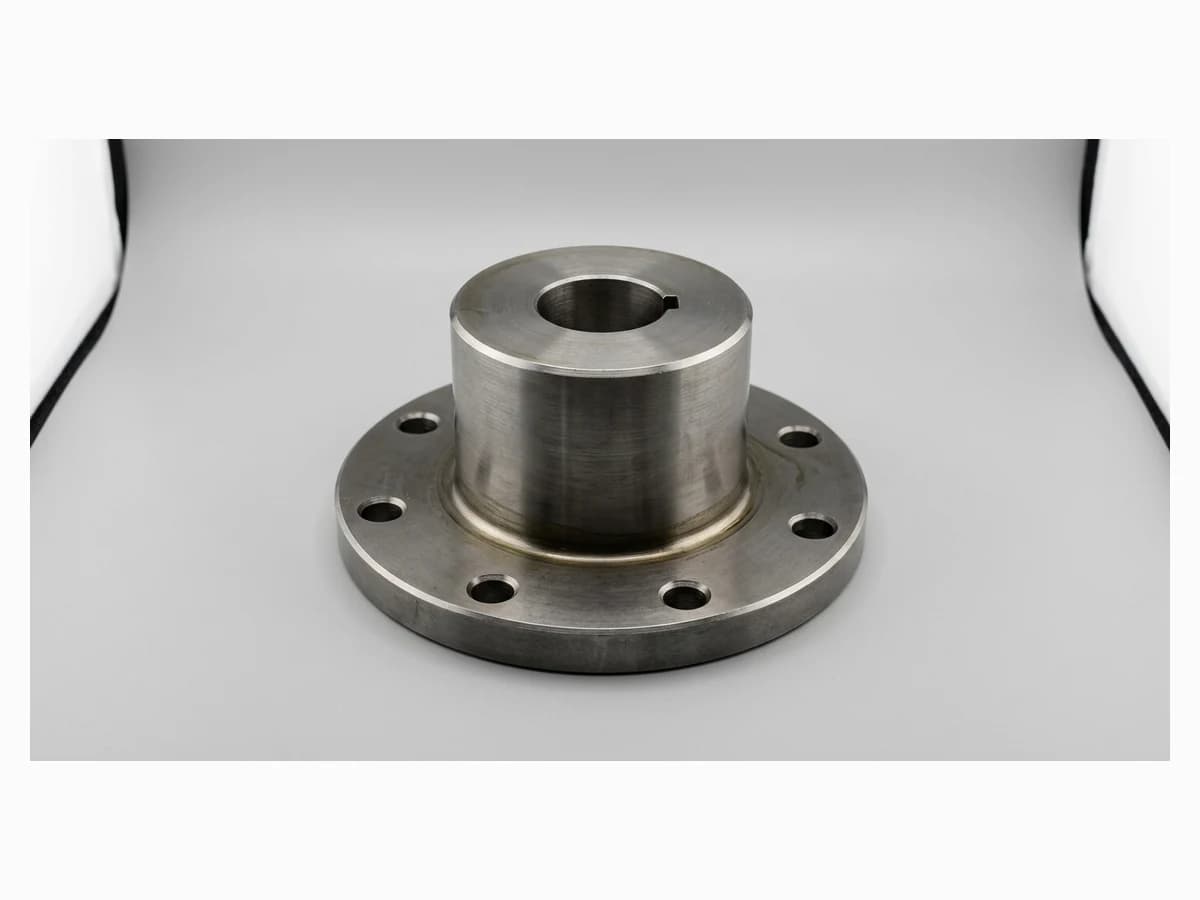
Shoot the part you need documented, a machined component, a worn part you are replacing, or a prototype that never got a print.
Anchor one measurement
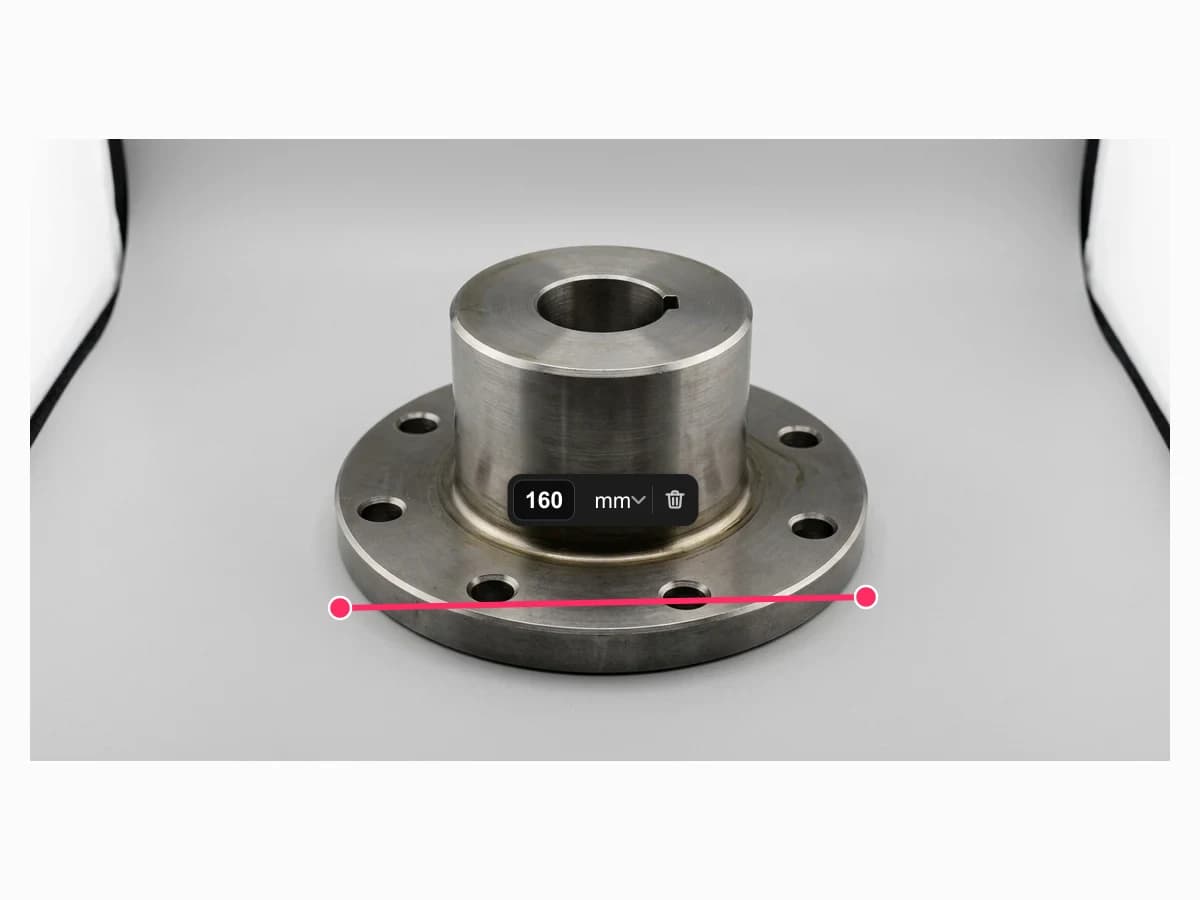
Pick the drawing type and units, then enter one real caliper measurement. Every other dimension is scaled from your reference, not guessed from pixels.
Get the working drawing
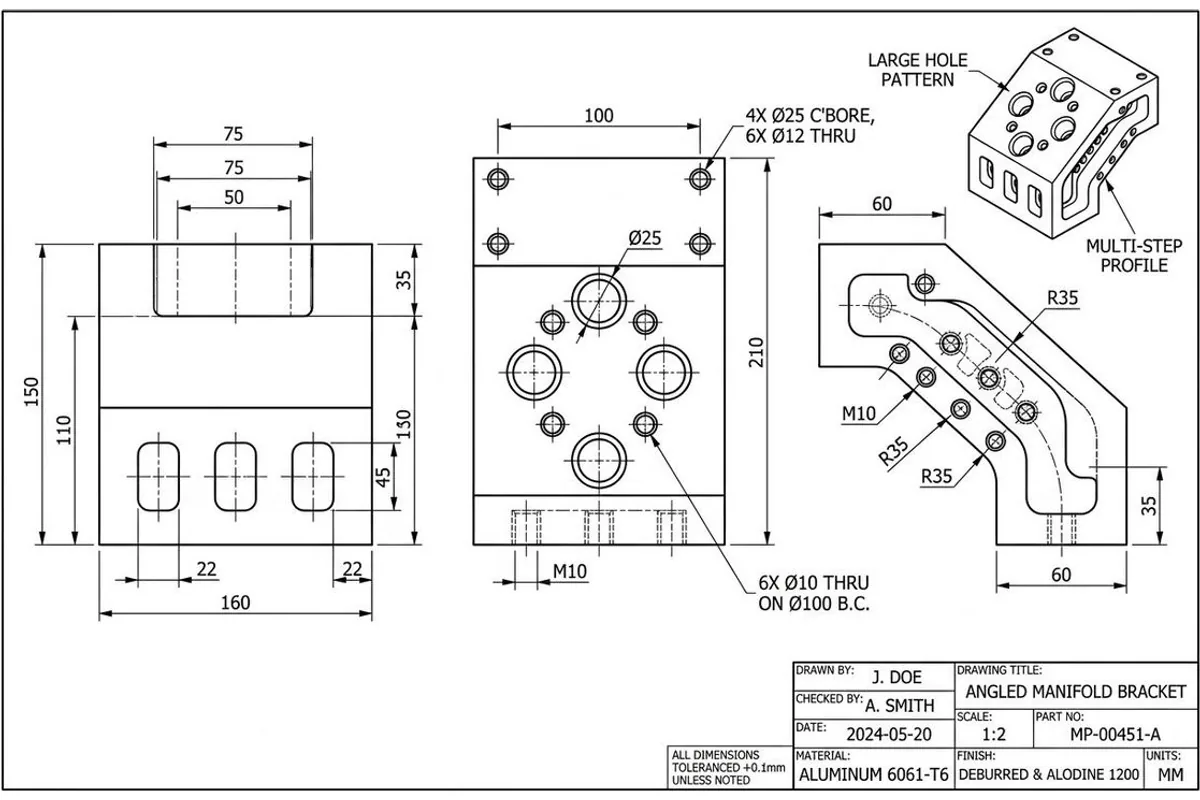
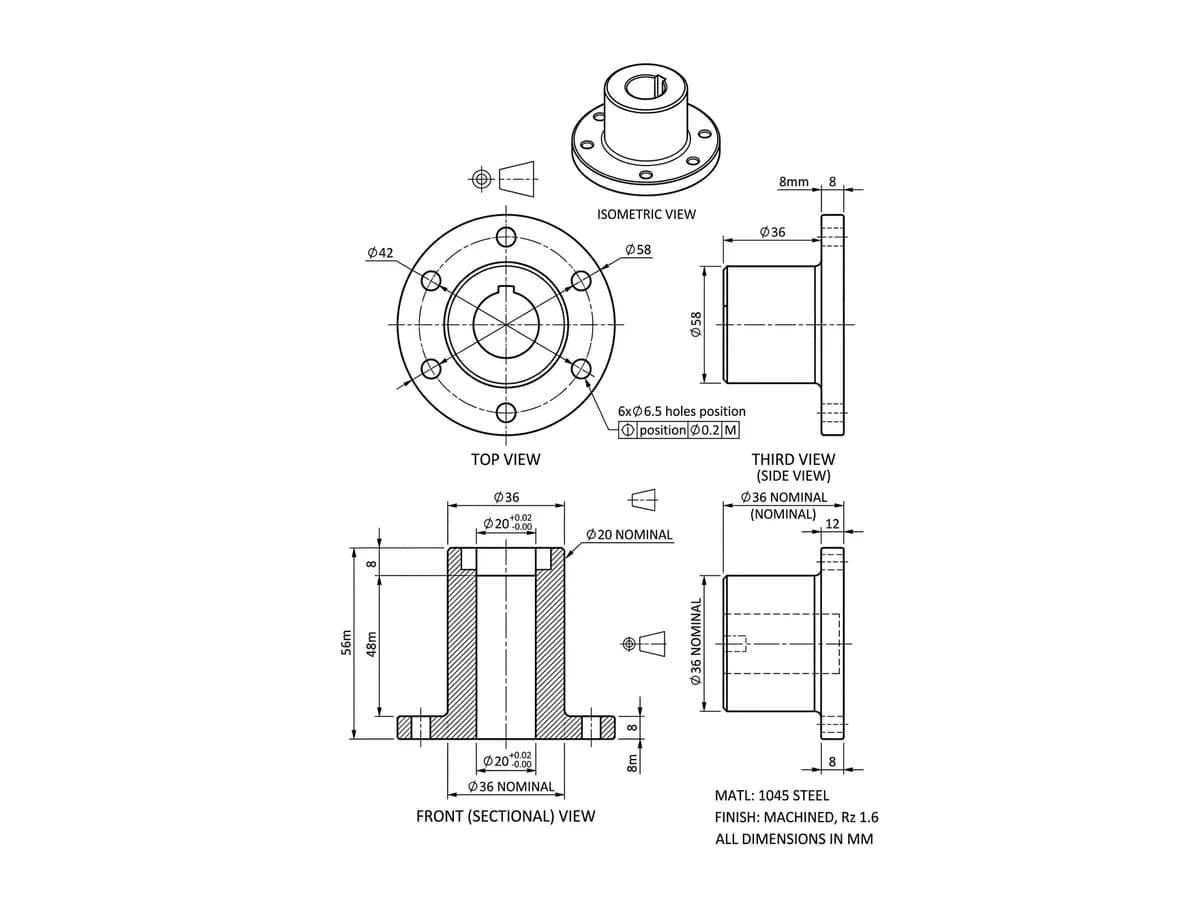
Receive a dimensioned production drawing with front, top and side views, sensible tolerances and callouts, ready to send to the shop for a quote.
Working drawings a machine shop will actually quote
A shop quotes the sheet, not the part. When a component has no print, someone has to measure it, lay out the views and dimension everything, which is an afternoon of drafting for a part you could photograph in ten seconds. TechDraw AI does the drafting: it reads the geometry from the photo, arranges proper orthographic views with a projection symbol, and anchors every dimension to the caliper measurement you provide.
That covers replacement parts with no documentation, legacy components before reordering tooling, and prototypes that skipped the drawing stage. Export DXF or DWG when the geometry heads into CAD or CAM, and PDF for the quote email. For parts that need reverse engineering from scratch, the guide below walks the whole path.
Parts drawn from a photograph
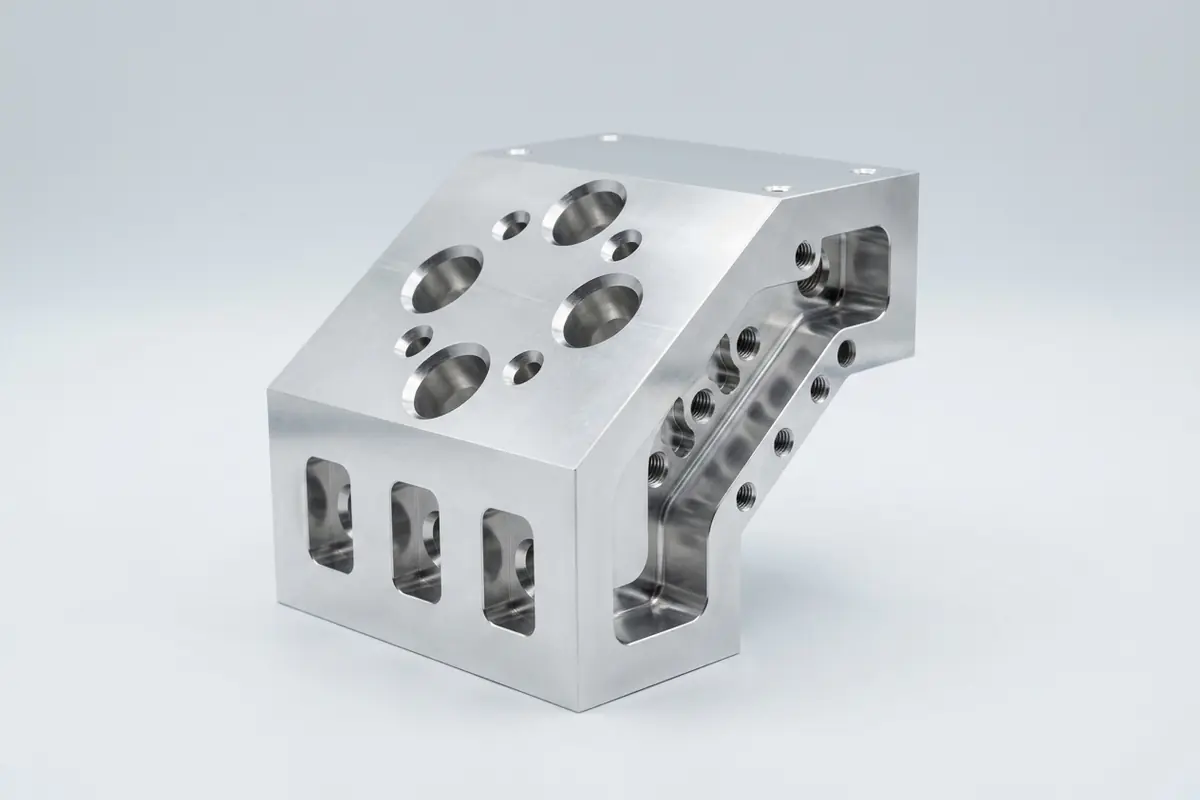
Twenty parts photographed on the bench and the working drawing taken off each: views, fits and finish callouts. Open a tile to drag the photo against the sheet.
Engineers and shops in 40+ countries quote from AI-drafted prints.

“My shop foreman asked which drafter made these sheets. It was just me and TechDraw AI lol. Did 3 parts in one afternoon.”

“found a tolerance error my old drawings missed for years. The AI flagged it and fixed the callout automatically.”
“I use this for client handovers now. Upload a part, get fully dimensioned views in 10 minutes. They think I have a whole drafting team.”

“Just started at a furniture workshop and had no idea how to do a cutting list. This generated the whole BOM from one photo. Way faster than I expected.”
“Tested every projection angle in 5 min. love it.”

“pretty impressed honestly. Full orthographic set in under a minute and the dimensioning was spot on.”

“I used to redraw everything by hand. Now I sketch on paper, photograph it, and get clean editable geometry back. Saved me hundredss of hours already.”
“found the GD&T symbols it placed were textbook correct. Nice.”

“Drew up my whole assembly in one evening. Showed my boss and he tought I outsourced it. Nope, just AI.”
“I'm not a draftsman at all but this made me feel like one. Tried an exploded view for a bracket and actualy sent it to the machine shop.”

“Only tool where the title block and standards come out ISO-correct every time. Huge diffrence compared to others.”
“used it to document my dad's workshop jigs. He saw the sheets and was like okay do all of them lol.”

“Been using it for 3 months on a product line. The AI keeps every view and the BOM in sync when I change a dimension. Saved me probably 2000+ hours of rework.”

“genuinely fun to use. The auto-dimensioning is addicting.”
“This replaced my drafting board, my templates, and half my CAD busywork. Not even exagerating.”

“section views that used to take an hour now take seconds. Worth every penny.”
“Changed one hole diameter and it updated across all four views and the parts list instantly. Mind blown.”

“Does in seconds what took me hours in CAD. Clean lines, correct scale. No lerning curve at all.”
“On the free plan and its been enough for my prototyping. Already exported 3 drawings to DXF. Will upgrade when the project scales.”

“Boss approved the drawing on the first pass wich never happens lol. Sent it to production same day.”

“Was redrawing a frame for weeks. Fed the photo into TechDraw and had the full set inmediately. Should have done this first.”

“used it for a tender submission and won the job. Big time saver.”

“upload a render, pick the views, export the sheet. 20 minutes total.”
“Tried 4 or 5 CAD tools before this. The line quality here is noticably better and it actually places dimensions correctly wich none of the others did. Game changer.”

“quick, easy, accurate. Using it for all my fabrication drawings now.”
“My colleagues kept asking who drafted my sheets. Told them it was AI and half the team signed up the same week haha.”
“As a mechanical engineer I was skeptical but this speeds up my workflow so much. Clients get drawings AND a parts list right away.”

“Where was this when I documented my first machine?? Now I run everything through the AI first and export production-ready sheets.”
Frequently asked questions
Can AI create an engineering drawing of a machined part?+−
Yes. Photograph the part and TechDraw AI drafts a working drawing with orthographic views, a projection symbol, dimensions in mm and sensible tolerance and finish callouts. You anchor the scale with one caliper measurement and review the critical values before exporting.
How accurate are the dimensions?+−
As accurate as the reference you provide. The AI does not guess sizes from pixels: you enter one real measurement and every dimension is scaled from it, then you confirm the values that carry your design intent. For toleranced features, measure them and set the values explicitly.
Will a machine shop accept an AI-generated print?+−
Shops care about the content of the sheet, not who drafted it. If the views are correct, the dimensions complete and the tolerances stated, it quotes and machines like any drawing. You review and confirm the key values before sending, exactly as you would with a junior drafter's sheet.
Can I recreate a drawing for a part that has no documentation?+−
Yes, that is the core use case. Legacy parts, worn components you need remade, or supplier parts that arrived without prints: photograph the part, measure the critical features, and get a dimensioned drawing you can send out for quotes instead of shipping the only sample you have.
What formats does it export for machining?+−
DXF and DWG for CAD and CAM, PDF for quoting and the shop floor, and SVG where vector graphics are needed. The DXF drops into Fusion, SolidWorks, FreeCAD or your CAM package as real geometry.
Does it handle tolerances and GD&T?+−
The drawing includes dimensional tolerances and standard callouts where they make sense, and you can adjust the values that matter. For heavily toleranced GD&T work, treat the sheet as the drafted starting point that you refine, which is still hours faster than starting from a blank sheet.
Other sheets this drafts
Section views and a tolerance block are what a machine shop needs to quote. Change the rulebook and the same engine writes bend allowances, joinery detail or a wall thickness check instead.
Furniture
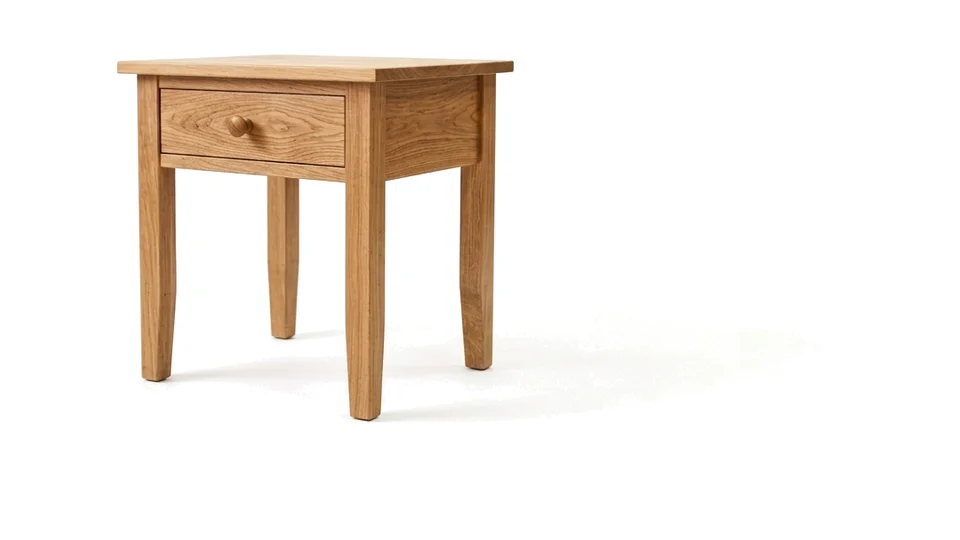
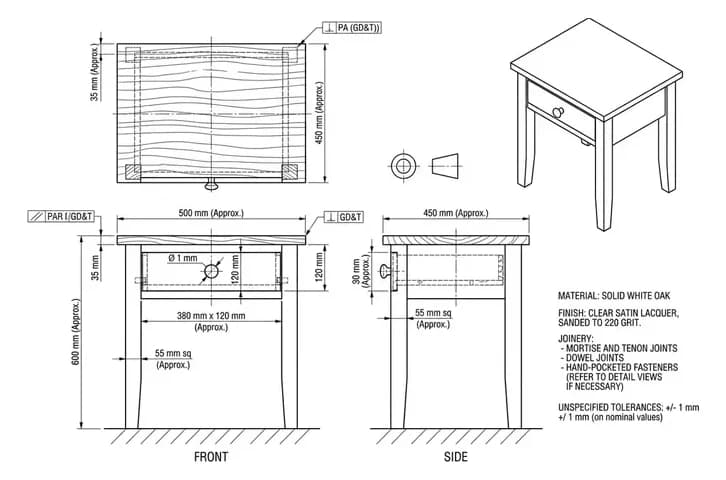
Shop drawings with joinery detail, real sizes and a cut list.
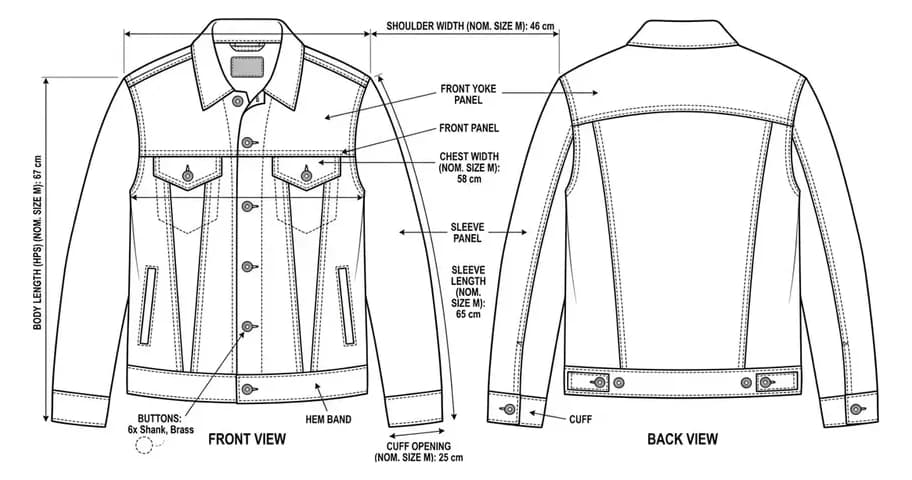
Clothes & Fashion
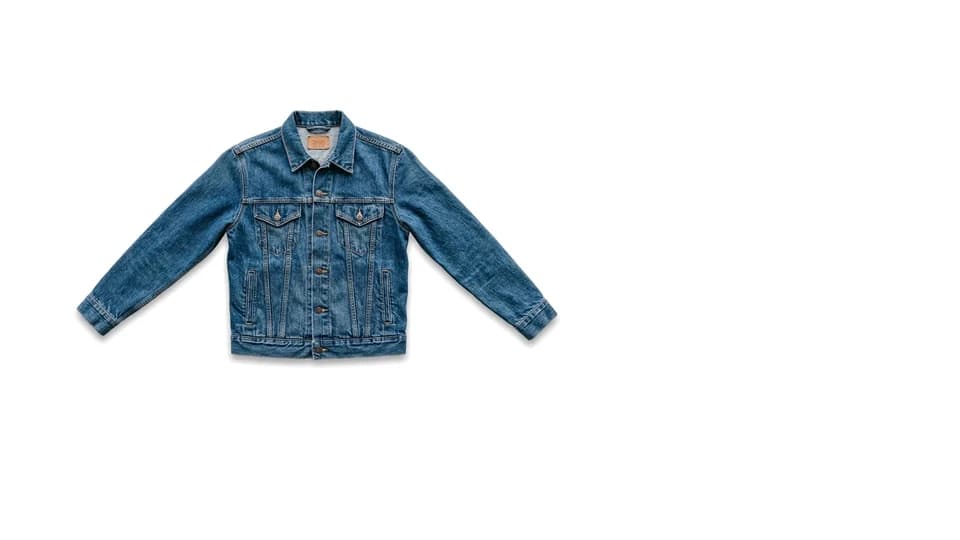
Front and back flats with the callouts a tech pack needs.
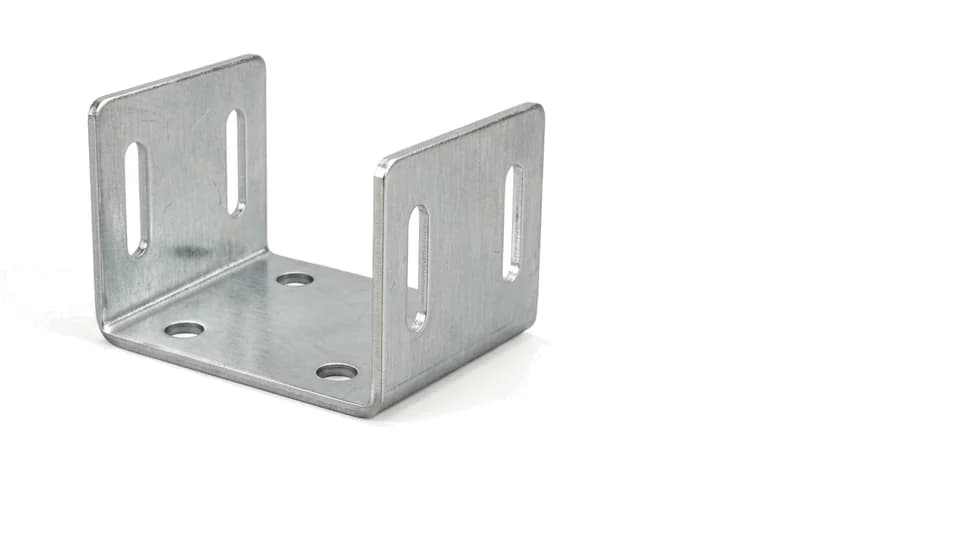
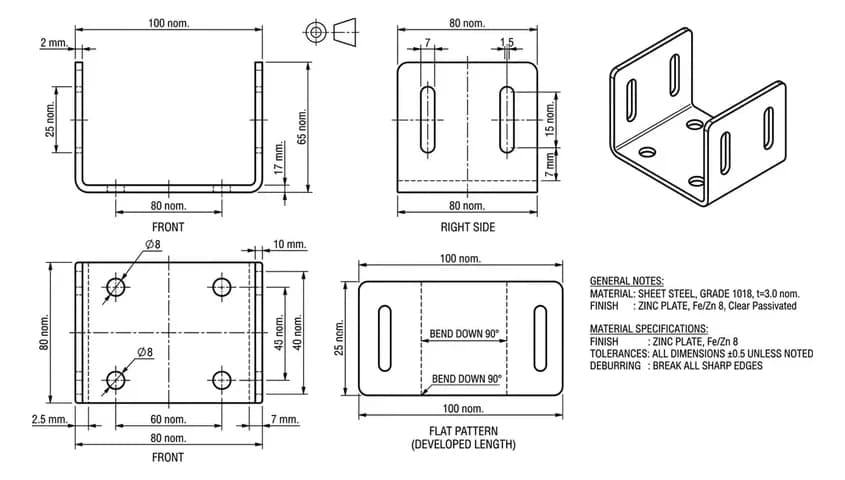
Sheet Metal
Bend lines, a flat pattern and a DXF for the laser table.
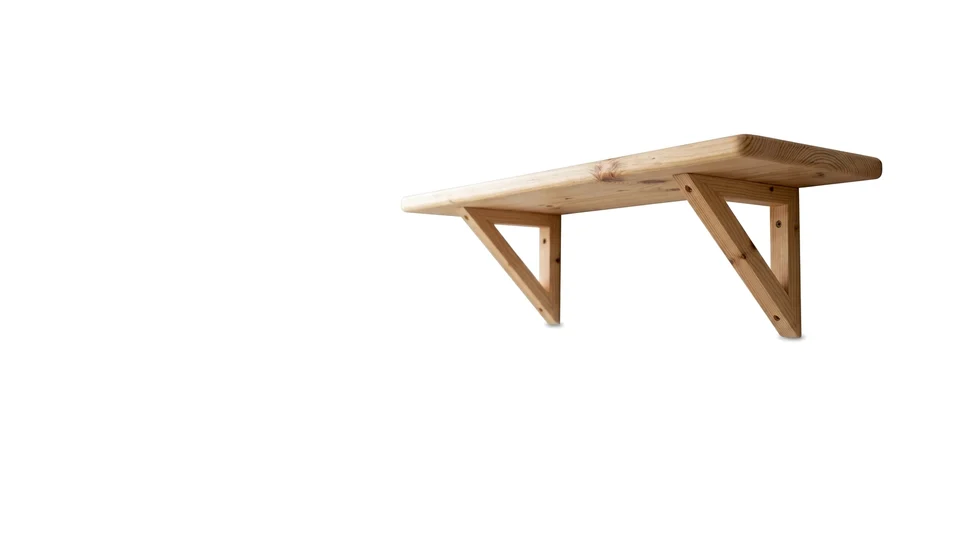
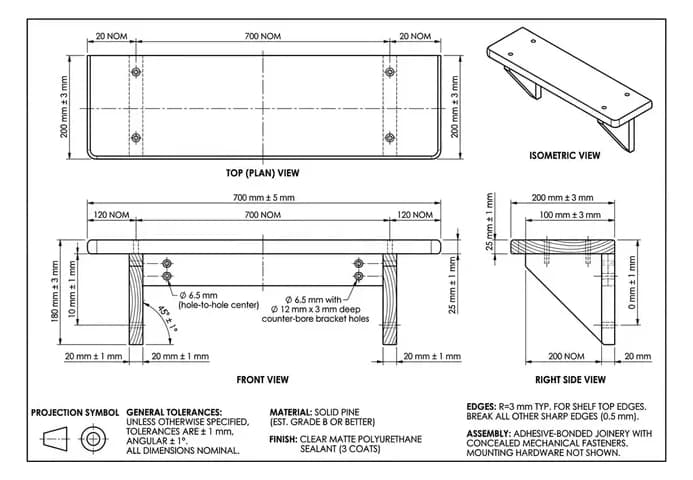
Woodworking
Plans you can build from, or a 1:1 template to print.
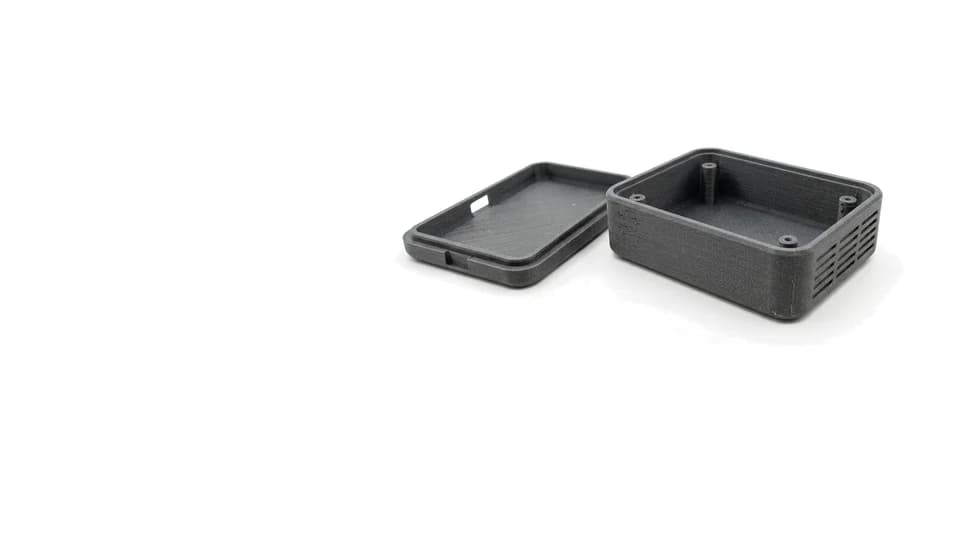
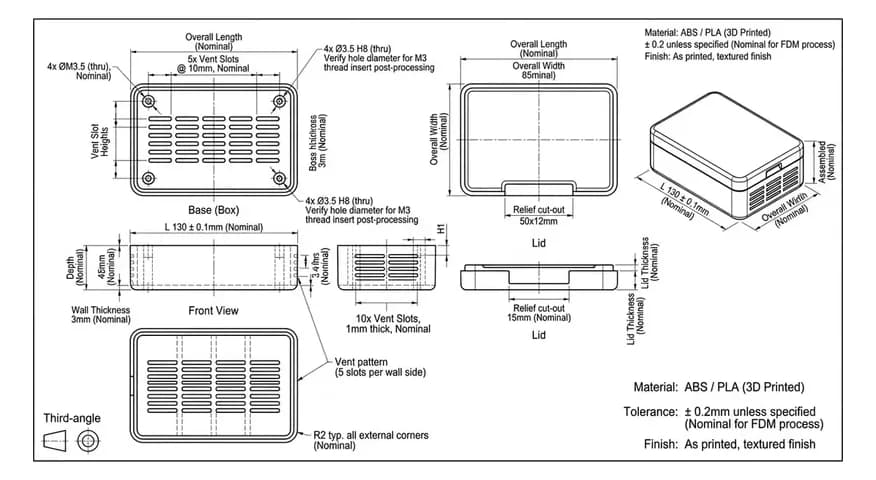
3D Printing
Wall thickness, clearances and fits, checked before you print.
Or start somewhere else. Describe the part in words and get the sheet or a 3D model without a photo, or get the object back as a 3D model from a photograph of it or from the drawing you already have.
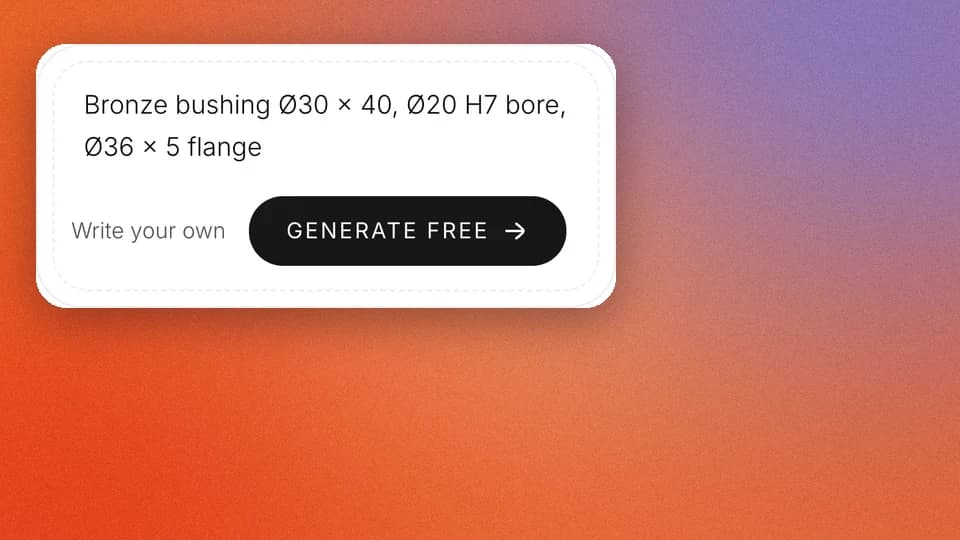
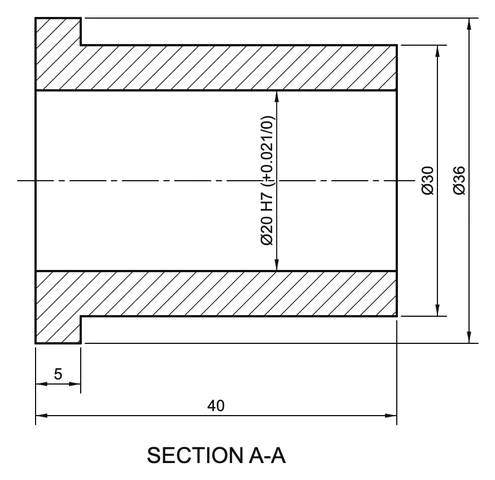
Text to drawing
Describe the part in a sentence. The sheet is computed from your numbers.
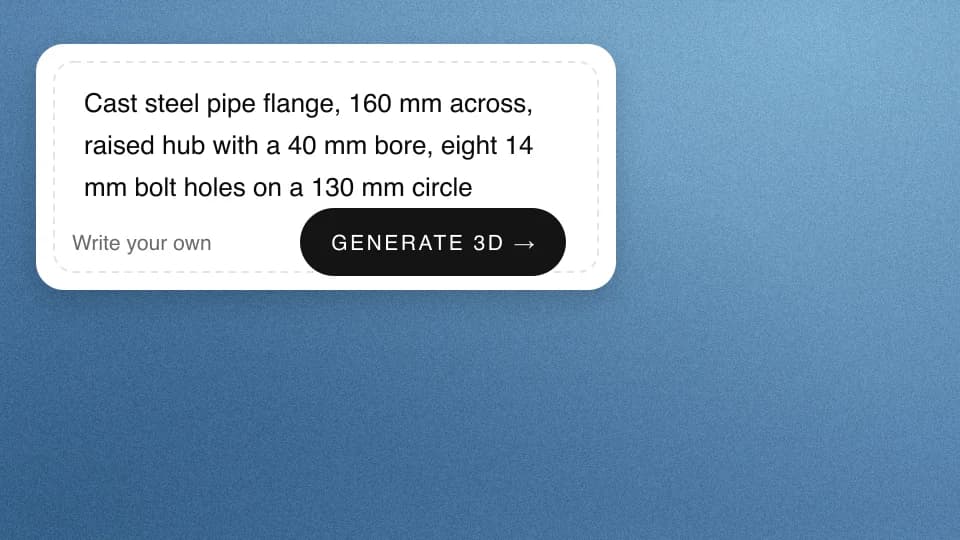
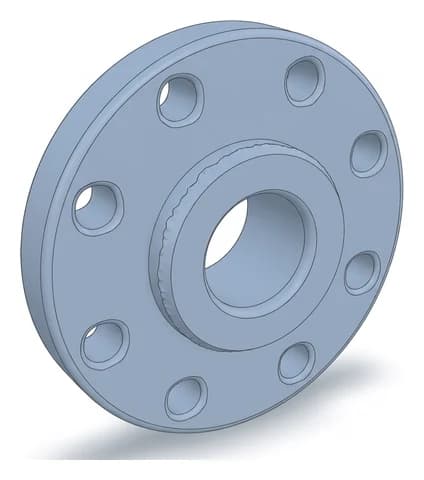
Text to 3D CAD model
Describe the part in a sentence and get it back as a 3D model.
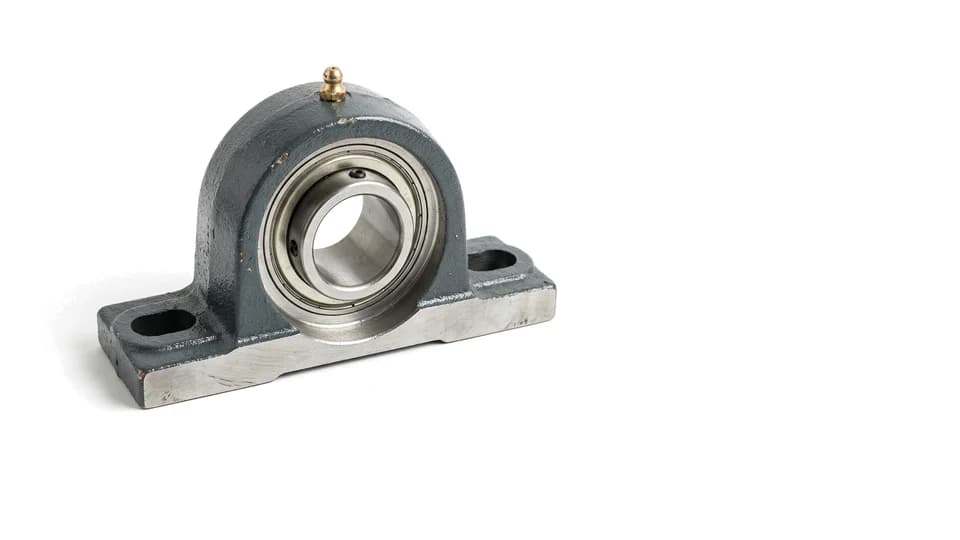
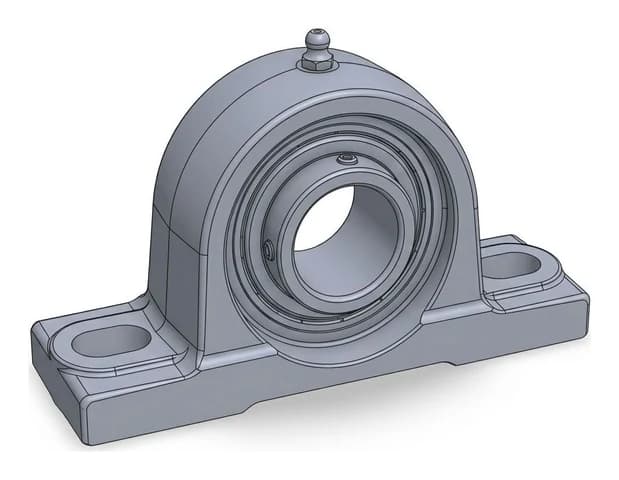
Photo to 3D CAD model
A photograph of the real thing, reconstructed as a mesh you can print.
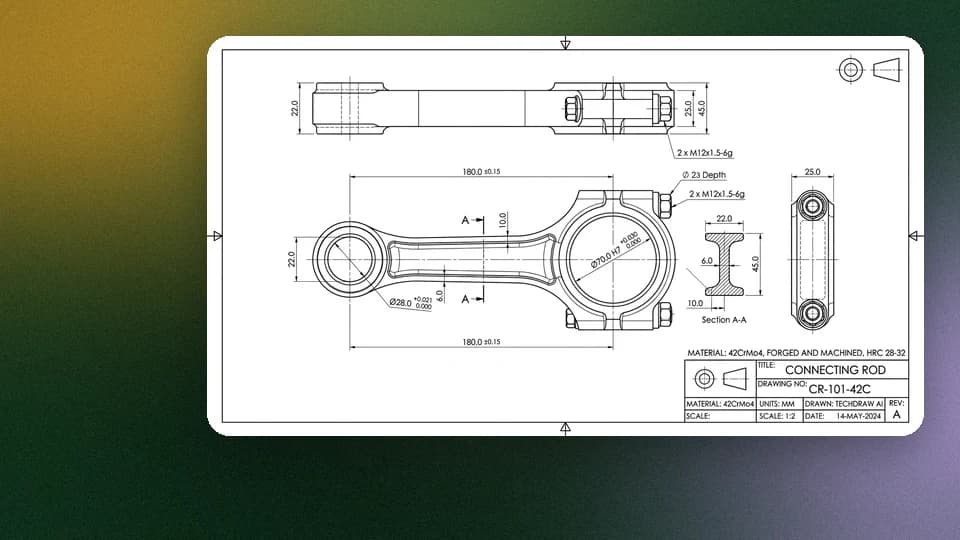
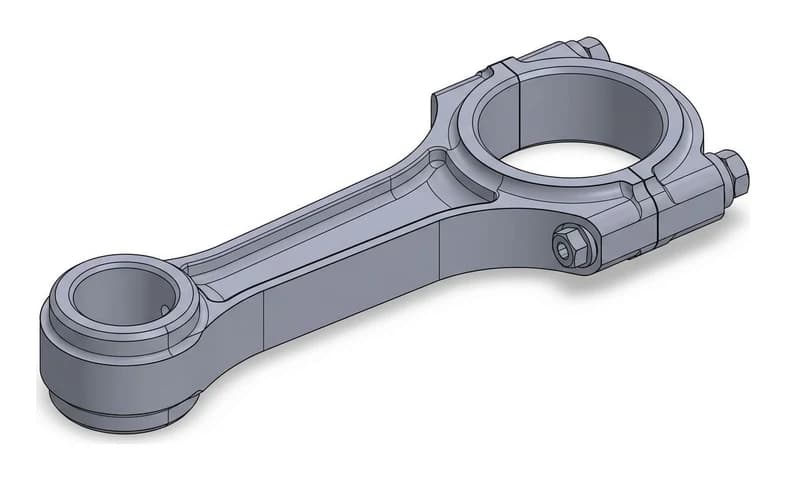
Drawing to 3D CAD model
A DWG, a DXF or a picture of the sheet, rebuilt as a 3D model.