AI Technical DrawingsYou Can Actually Manufacture




1,200+ reviews
AI Technical Drawings in three steps
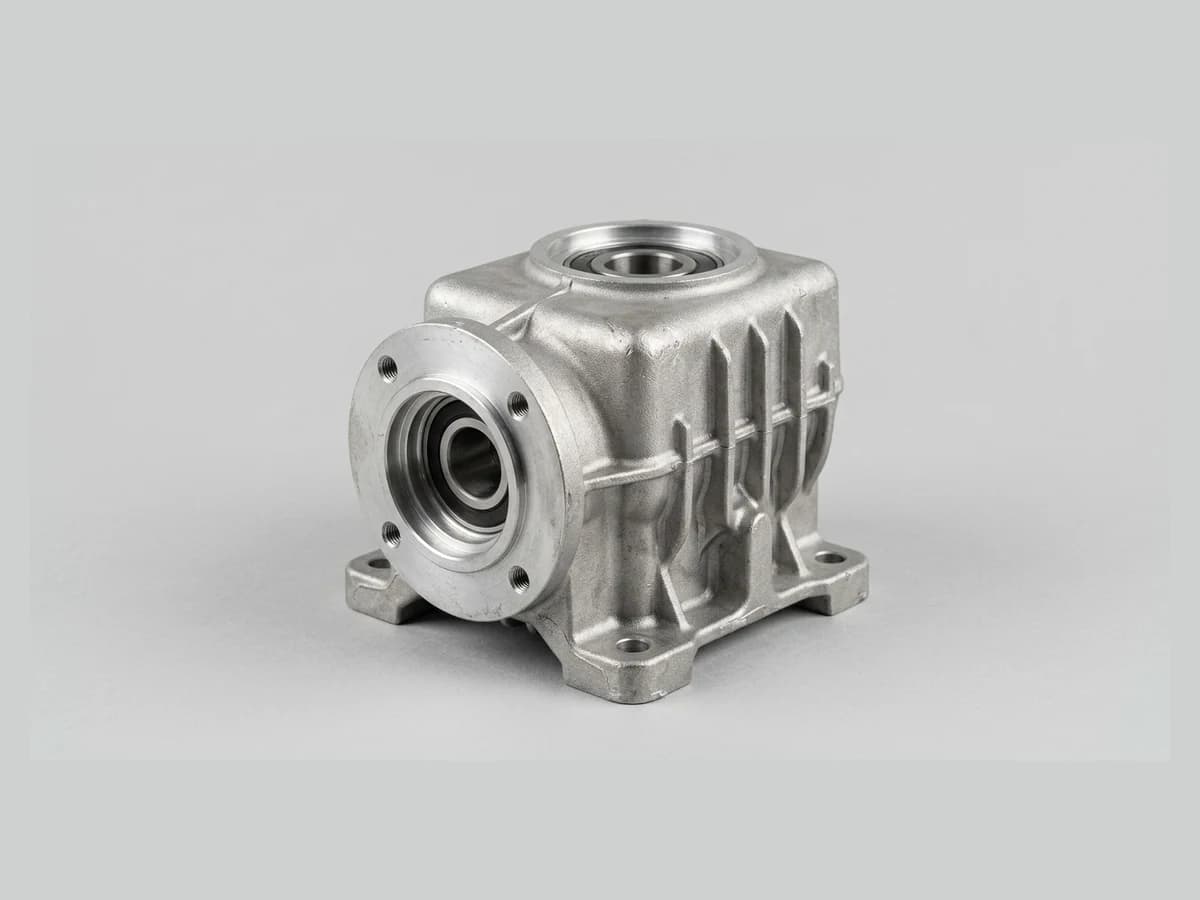
Photograph the part
Upload a photo of the thing you need drawn. A real part on the bench, a prototype, a sample from a supplier. No model, no sketch and no blank CAD canvas to start from.
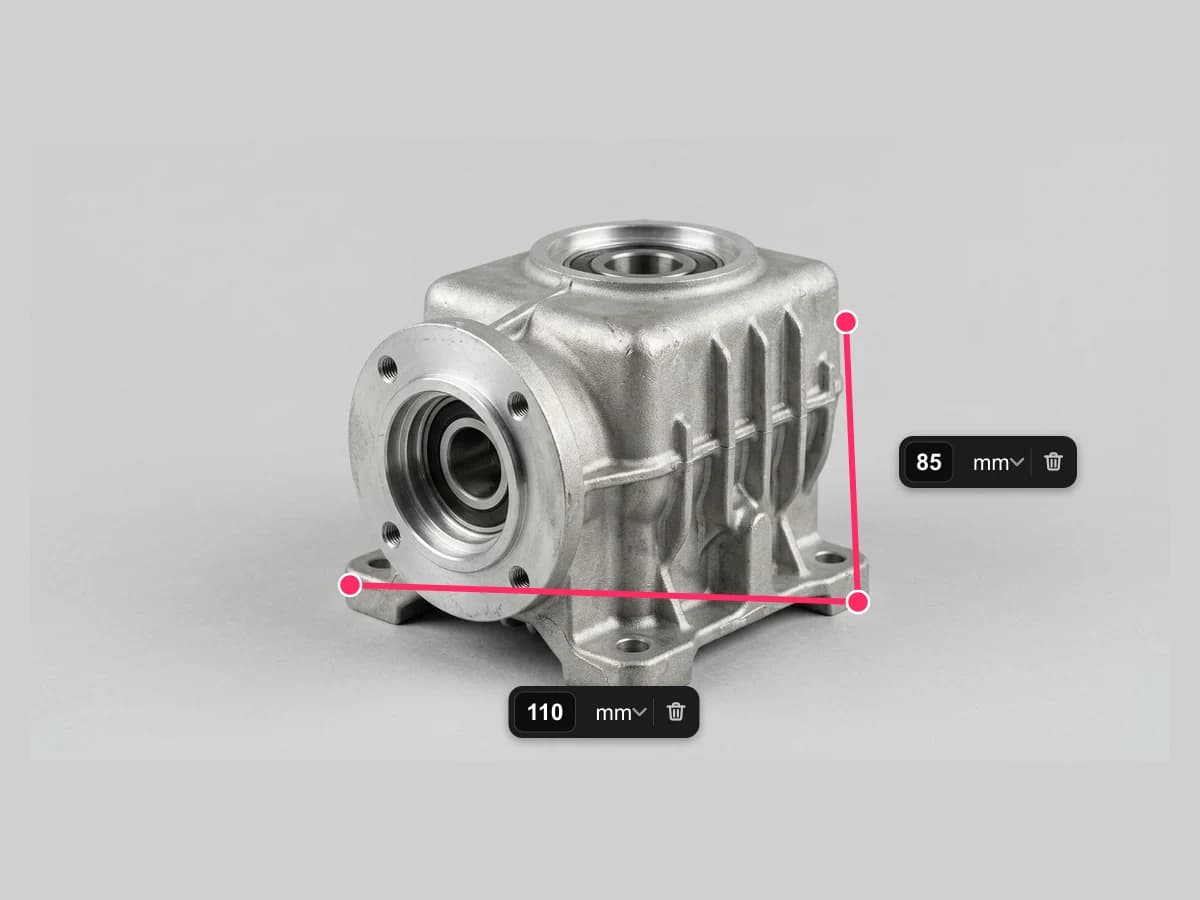
Give it one real measurement
This is the step the image generators skip, and it is the one that decides whether you get a drawing or a picture. Type in one dimension you measured, and every other dimension on the sheet is derived from it instead of from pixels.
Get a drawing, and a file
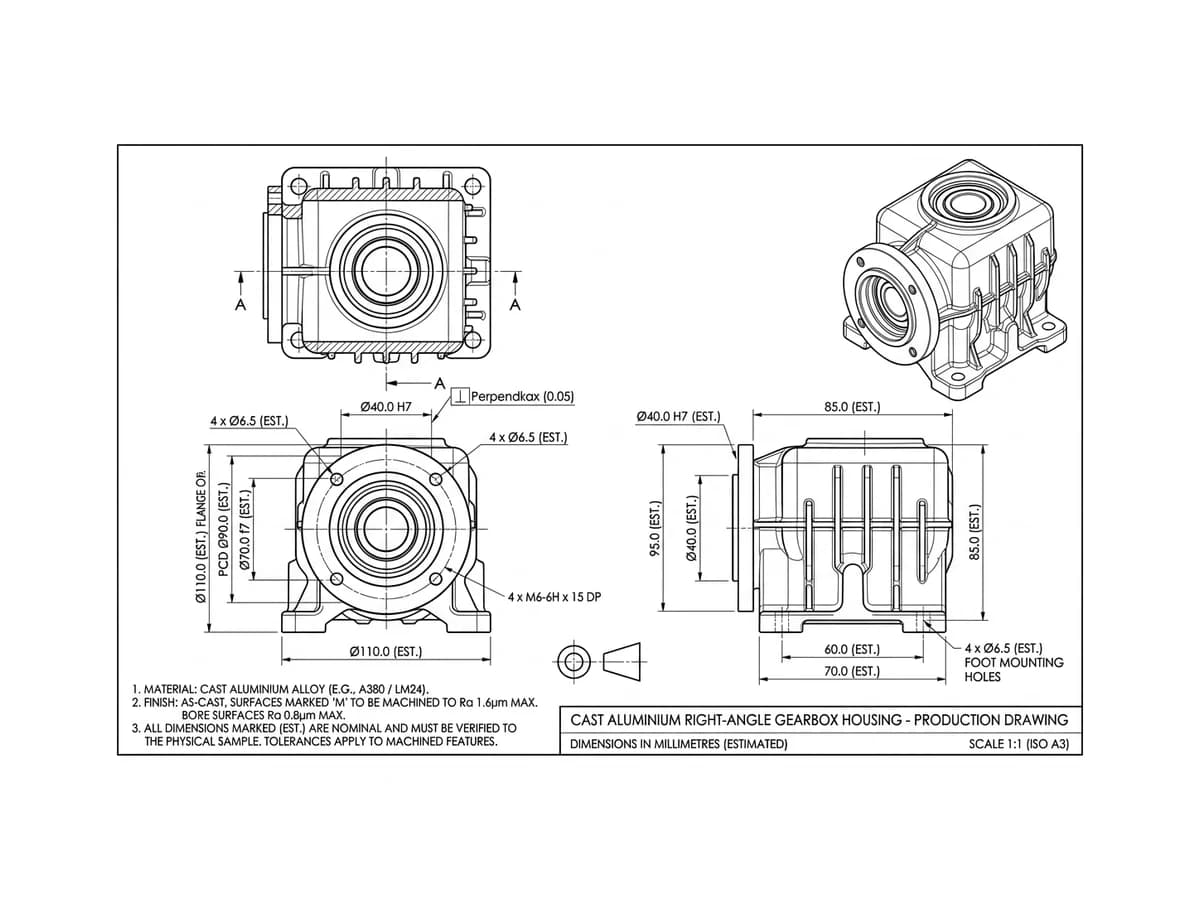
Out comes a dimensioned working drawing with orthographic views, plus DXF, DWG, SVG and PDF. The DXF is real vector geometry, so it opens in AutoCAD or goes to a laser rather than living in your downloads folder as a JPG.
Why most AI technical drawing generators can't help you
Search this term and nearly every result is an image generator. You type a description, it paints something that has the look of an engineering drawing: thin lines, arrowheads, a title block, numbers along the edges. It is genuinely impressive as a picture. The problem is that the numbers are invented, the views do not agree with each other, and the output is a PNG. Nothing in it can be opened, edited, measured or cut.
TechDraw AI works the other way around. It starts from a photo of a part that physically exists, so the geometry is observed rather than imagined, and it makes you anchor the drawing to one measurement you took yourself so the scale is real. What you get back is a dimensioned drawing plus a DXF or DWG of actual vector geometry. It is honest about its ceiling too: this is a measurable 2D drawing you can edit and quote from, not a parametric 3D solid conjured out of a single photo.
Drawings made this way
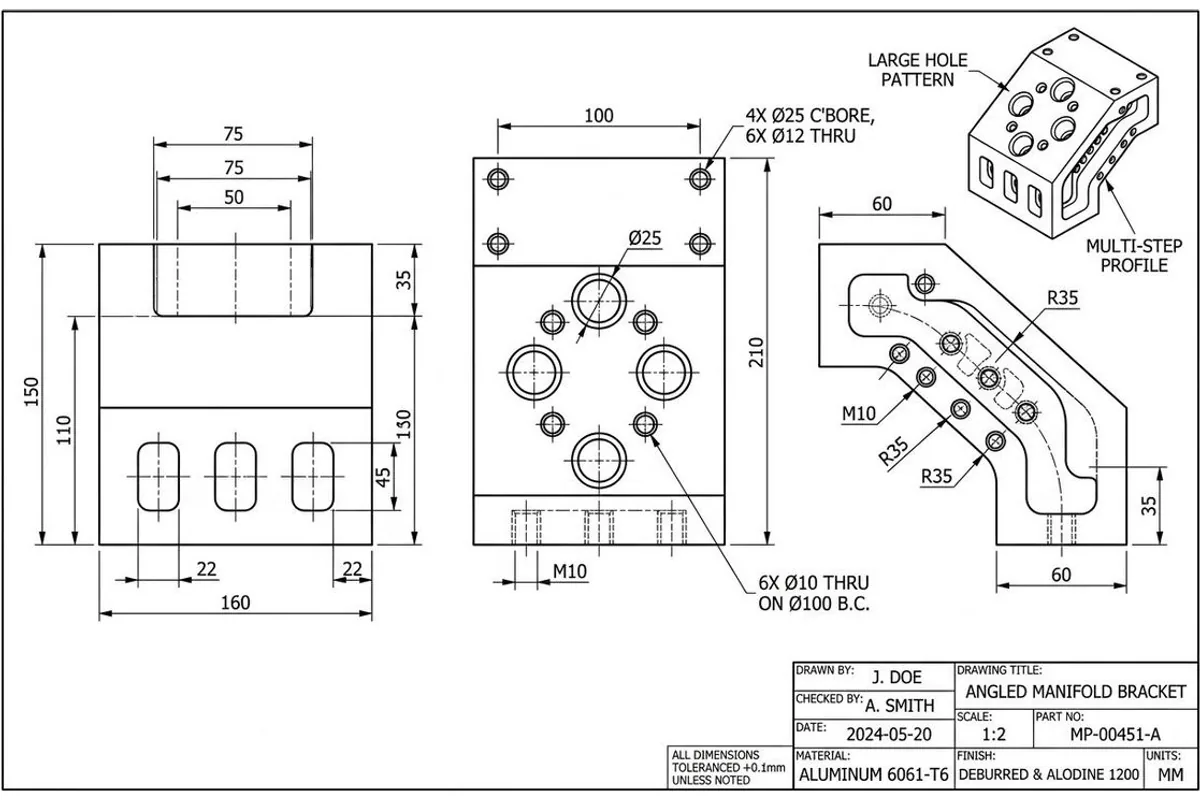
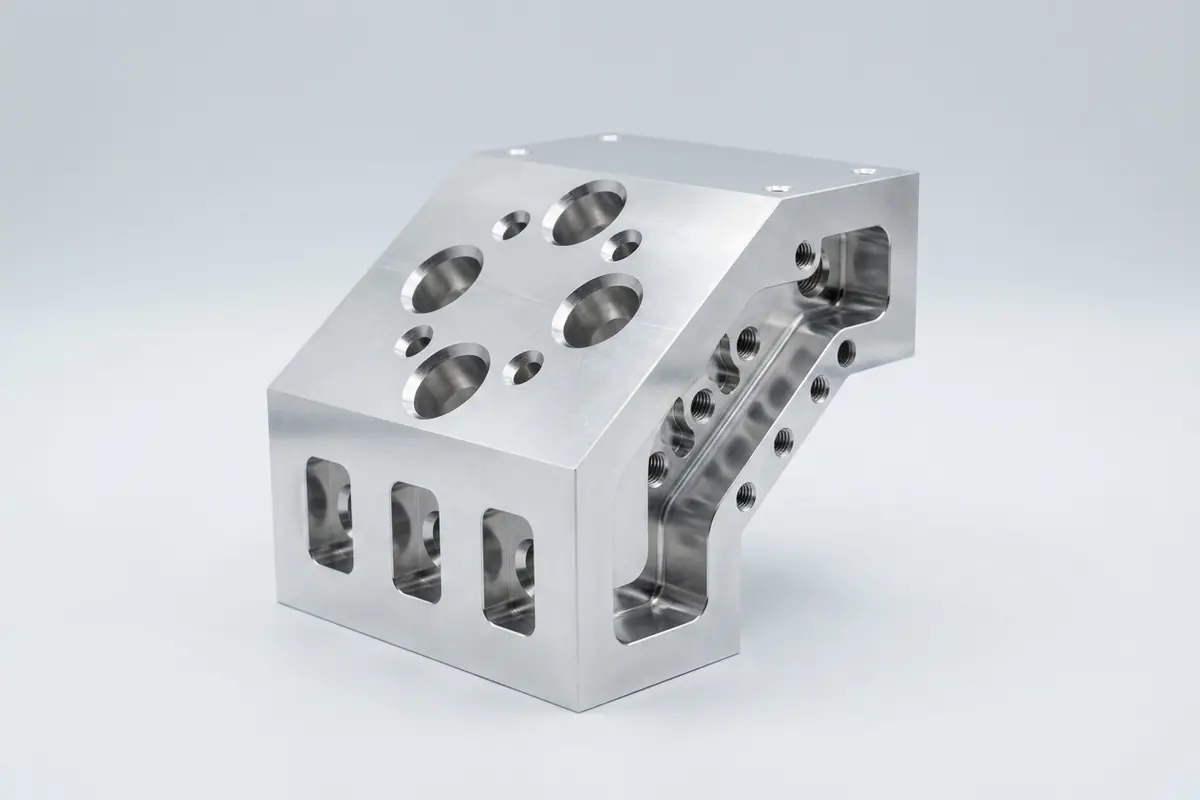
Every sheet below started as a photograph, not a text prompt. Open one and drag the two against each other to see what the model was handed and what it drew.
Trusted for real drawings

“Tried four of those AI blueprint generators first. All of them gave me a pretty png with made up numbers. This one gave me a dxf my laser guy actually cut.”

“The measurement step is the whole thing. Once I typed in the bore diameter everything else came out right. Nothing else I tried even asks.”

“I needed a drawing of a pump housing with no model and no supplier drawing. Photo in, dimensioned sheet out, opened straight in AutoCAD.”

“Was expecting another toy honestly. The views actually agree with each other which is more than I can say for the last one.”

“Does what it says and admits what it cant do. It wont give you a 3d model from one photo and it tells you that up front. Refreshing.”

“Used it to document a legacy part nobody had drawings for. Took an afternoon instead of the week I budgeted.”

“Export options are the diffrence. dxf dwg pdf svg all from the same drawing, no converting back and forth.”

“My workflow used to be photo, then trace it by hand in cad, then dimension it. Now its photo, one measurement, done.”
Frequently asked questions
Is there an AI that can generate a real technical drawing?+−
Yes, but you have to be careful what a given tool means by "generate". Most tools ranking for this term are text-to-image models: you describe a part and they paint an image that looks like an engineering drawing, complete with invented dimensions and views that do not line up. That is a picture of a drawing, not a drawing. TechDraw AI takes a different route: it reads a photo of a part that actually exists, ties the geometry to one measurement you provide, and outputs both the dimensioned sheet and a DXF or DWG of real vector geometry.
Can AI generate a technical drawing from a text prompt?+−
It can generate something that looks like one, and that is exactly the trap. A model has no way to know what your part measures if all it has is a sentence, so every dimension it writes is a guess presented with total confidence. That is more dangerous than no drawing at all if the sheet is heading for a shop. A photo changes the problem: the geometry is observed instead of invented, and one real measurement fixes the scale for everything else.
What file does the AI drawing generator give me?+−
DXF, DWG, SVG and PDF from the same drawing. The DXF and DWG are real vector geometry, so they open as editable entities in AutoCAD, Fusion 360, SolidWorks, FreeCAD and the rest, and flat parts can go straight to a laser or waterjet. The PDF is the sheet to send or print. Image generators, by contrast, hand you a PNG or JPG and nothing else.
Does it work for engineering drawings, not just technical drawings?+−
They are the same document. An engineering drawing is a technical drawing of a part or assembly carrying the information needed to make it: views, dimensions, tolerances and notes. The output here is drafted as a working drawing with orthographic views and callouts, which is what people mean by either phrase.
How accurate are the dimensions?+−
They are as good as the measurement you anchor them to, and we would rather say that plainly than claim more. You give one real dimension you took with a caliper or tape, and the rest of the sheet is scaled from it, so proportional accuracy is high and absolute accuracy tracks your reference. It is a reliable starting point you check and adjust, not a metrology report. Anything heading for tight-tolerance manufacture should still be verified against the physical part.
Can it make a 3D model instead?+−
Not from a single photo, and any tool promising otherwise is guessing at the geometry it cannot see. What you get here is a 2D technical drawing plus a DXF. If you need a solid, the usual route is to take that DXF into a modeller and extrude or revolve it, which is a short job once the profile is already drawn to size.
Pick the trade you draw for
A drawing is only manufacturable if it follows the conventions of the shop that reads it, and those differ by trade. The generator drafts to all six rulebooks; these pages show what each one hands back.
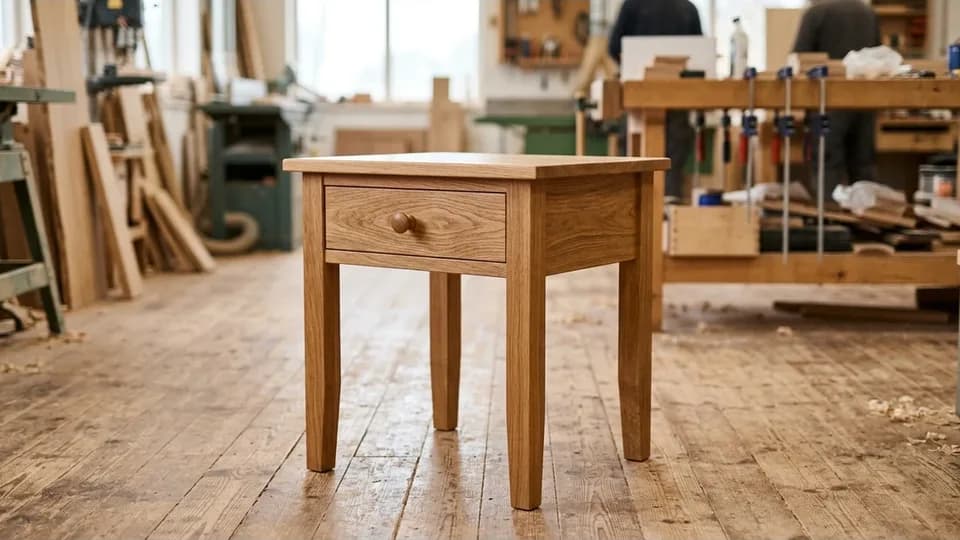
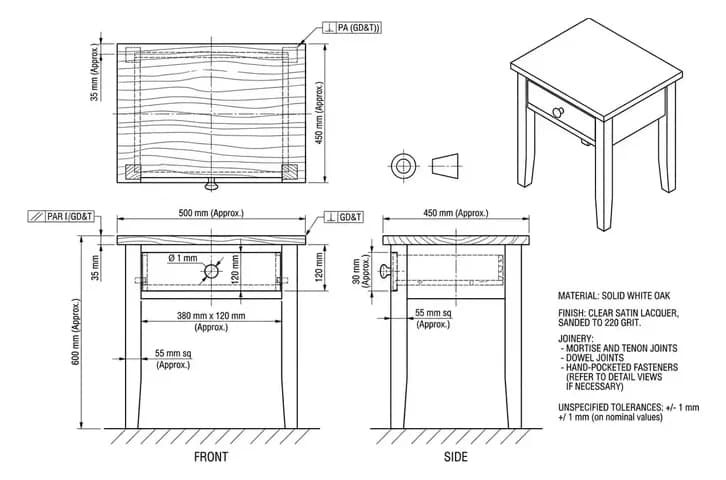
Furniture
Shop drawings with joinery detail, real sizes and a cut list.
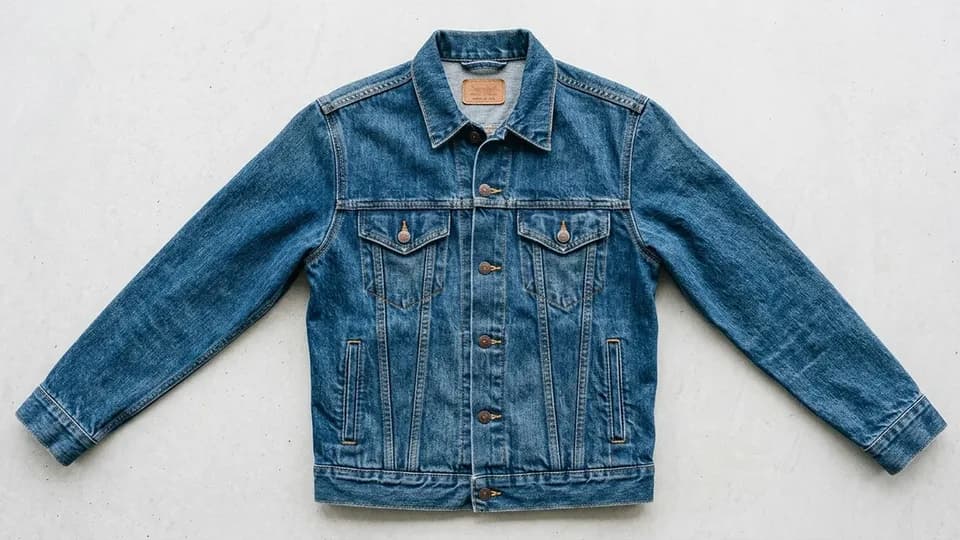
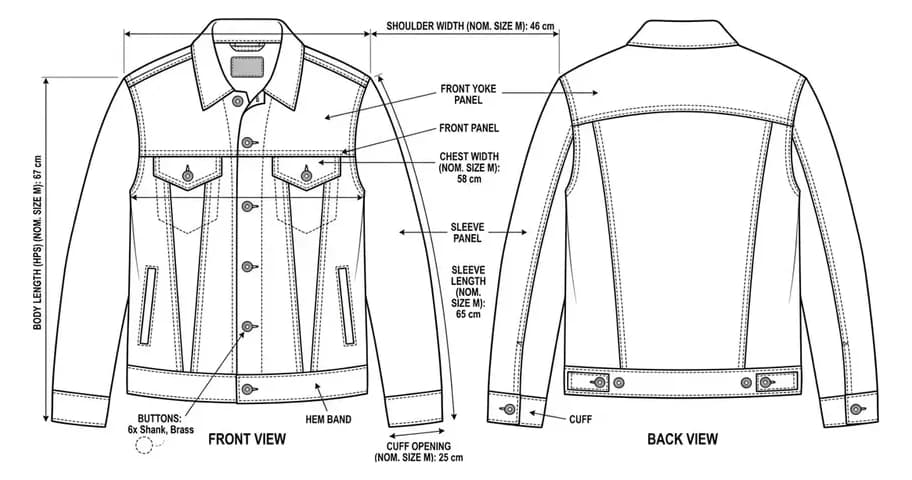
Clothes & Fashion
Front and back flats with the callouts a tech pack needs.
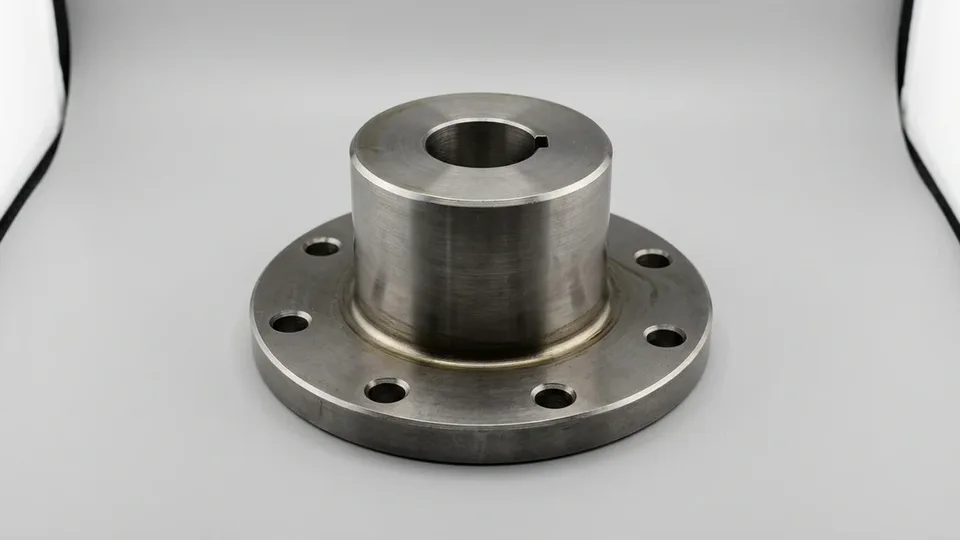
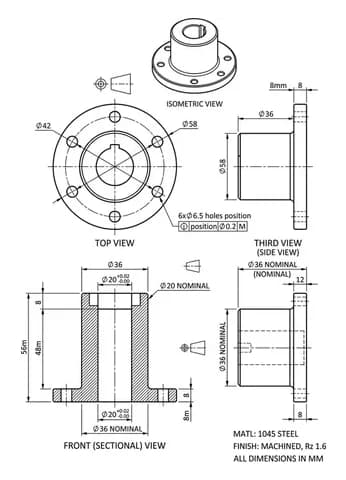
Machine Parts
Views, tolerances and a DXF your machine shop can quote from.
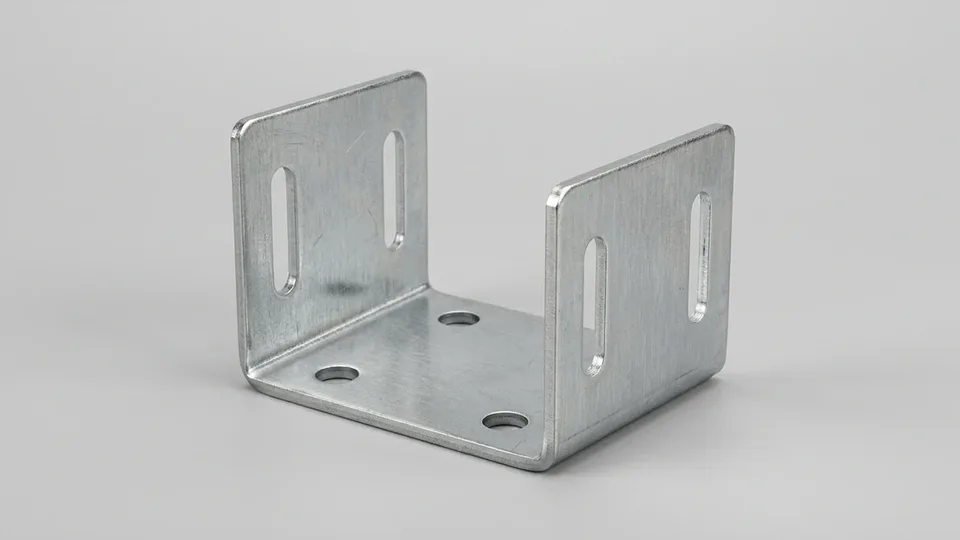
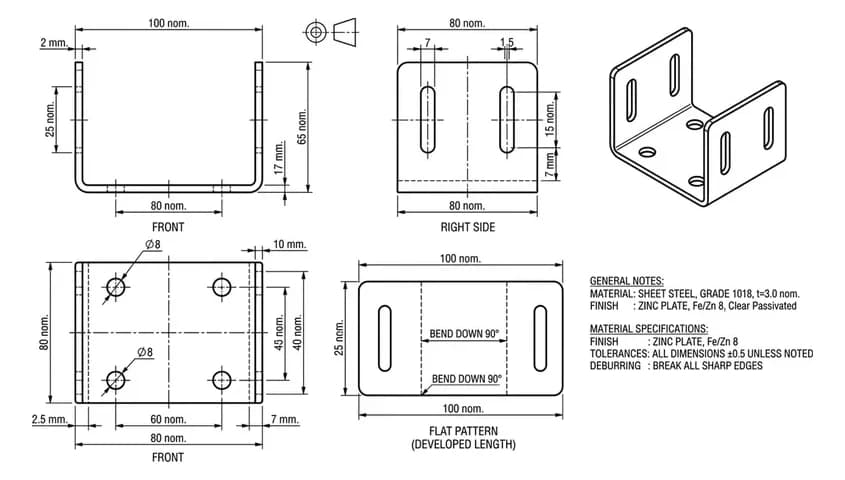
Sheet Metal
Bend lines, a flat pattern and a DXF for the laser table.
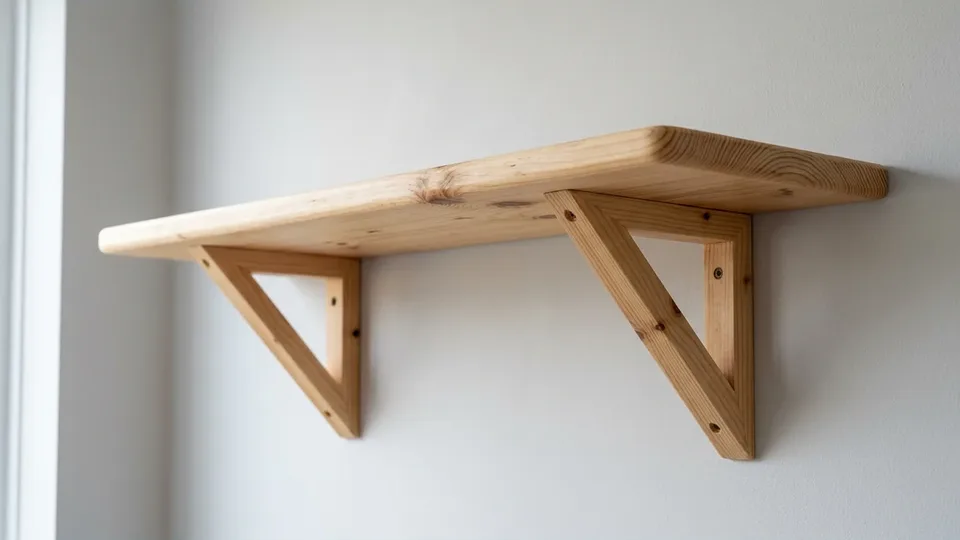
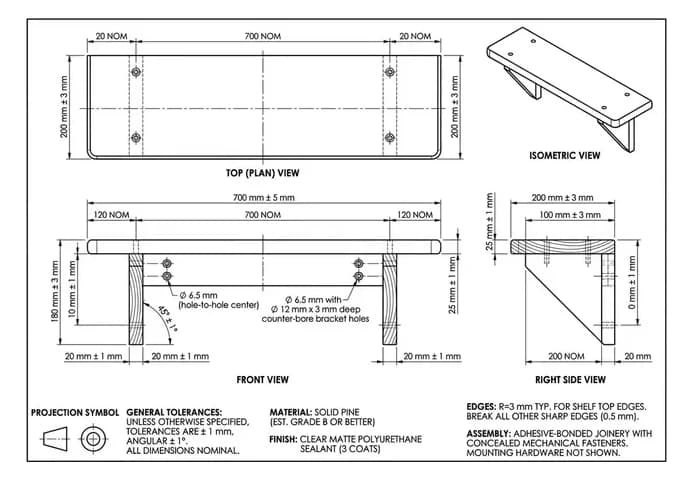
Woodworking
Plans you can build from, or a 1:1 template to print.
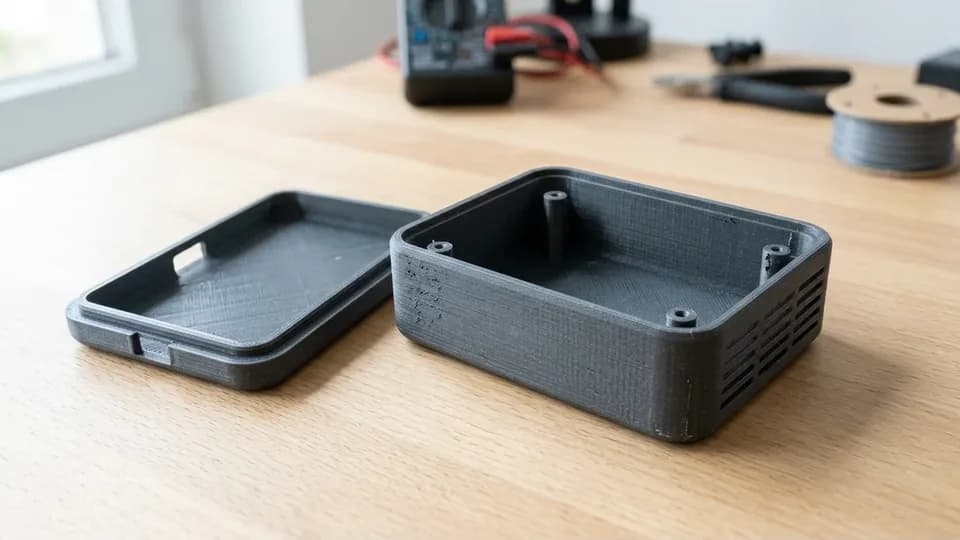
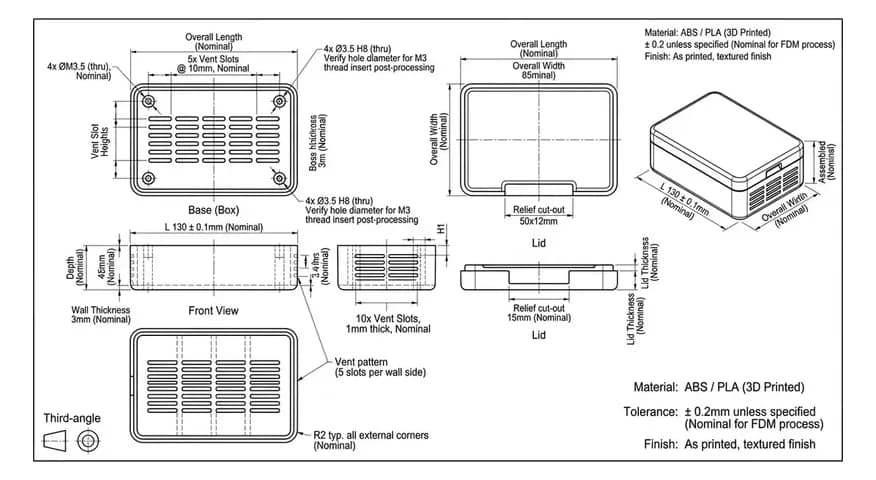
3D Printing
Wall thickness, clearances and fits, checked before you print.