
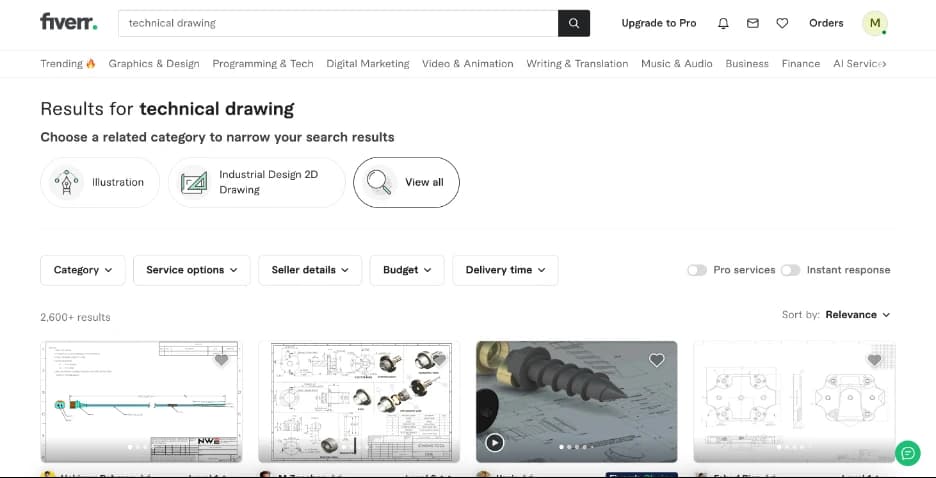
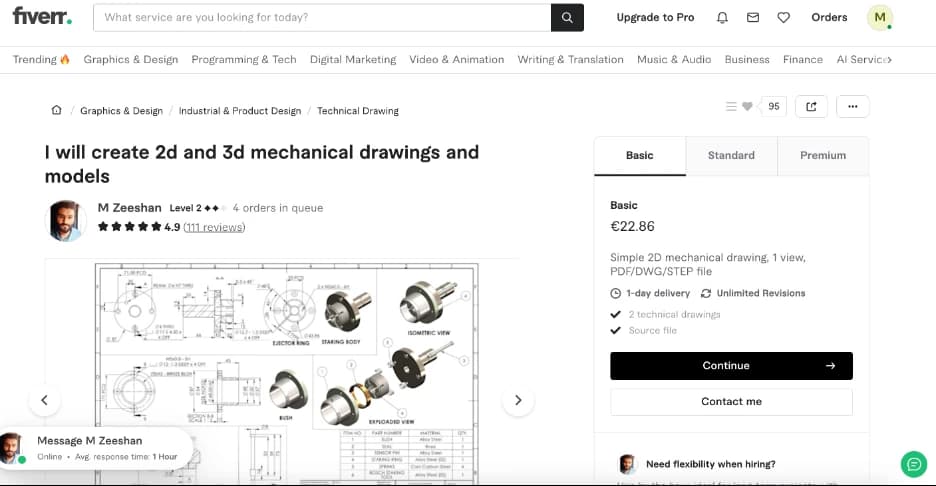
Open Fiverr, type "CAD drawing," and scroll. You will find hundreds of freelancers turning sketches, photos and old PDFs into clean technical drawings. Some charge $5, some charge $100 a part. It is a quiet, durable corner of the gig economy: unglamorous, in constant demand, and limited by basically one thing, which is how fast a single person can draft. That one constraint is exactly what AI is starting to rewrite.
Our articles are still written by humans!
Get human written articles in your Google feed.
The Fiverr CAD market is real, and underserved
Most "make money with AI" lists send you straight into the crowded niches like logos, blog posts and voiceovers, where ten thousand sellers undercut each other on price. Technical drawing is a different animal. It needs a real skill (reading a part and dimensioning it correctly), the buyers are businesses with actual budgets, and the work keeps coming because physical parts keep needing documentation.
Search the platform and the demand is obvious. There are whole categories for CAD design, image to CAD, sketch to CAD and DWG conversion. The buyers usually fall into a few groups:
- Product designers who sketched a part and need a manufacturable drawing.
- Machine shops and laser cutters that got handed a customer photo or a messy PDF and just need a clean DXF to cut from.
- People with a broken or legacy part and no drawing, which is a classic reverse engineering job.
- Architects and fabricators digitizing old hand-drawn blueprints into AutoCAD.

What a typical CAD gig looks like
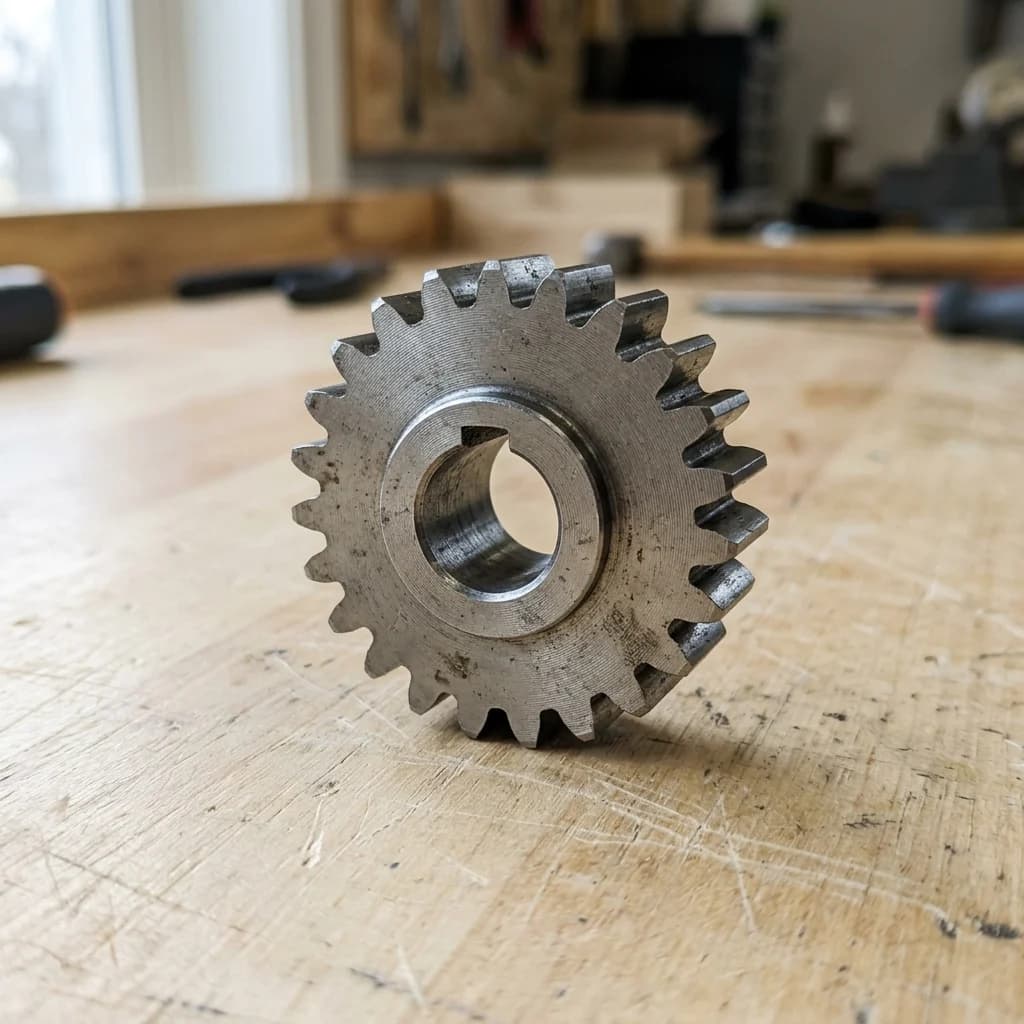
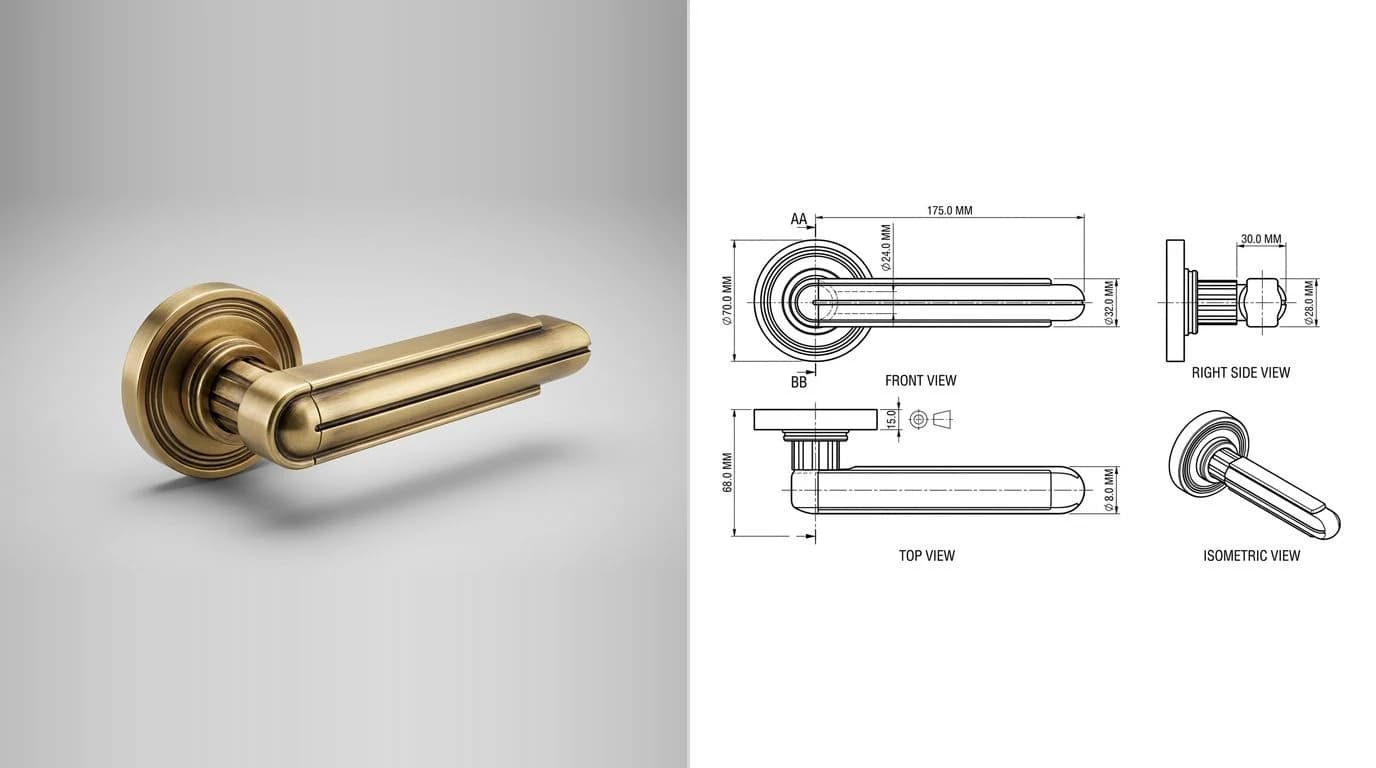
The most common entry-level gig is a conversion. The client sends a photo, a hand sketch or a PDF, and you send back an editable CAD file, usually a DXF or DWG, often with a dimensioned PDF next to it. On Fiverr today these run from about $5 for the simplest sketch up to $100 for cleaning a stack of old drawings into AutoCAD. A multi-view manufacturing-ready drawing with proper orthographic views, dimensions, tolerances and a title block commands more.
What CAD-adjacent gigs actually sell for on Fiverr
Notice the pattern. Prices are fixed per delivery, but every one of them carries a turnaround measured in days. That gap, between a fixed price and a slow delivery, is where most of a freelancer's potential income quietly leaks away.
Where the hours actually go
Drafting itself is the bottleneck. When you charge a flat $40 for a drawing, the only real lever on your hourly rate is how long that drawing takes you. And the slow steps are always the same three:
- Tracing the geometry. Rebuilding the outline, the holes and the features from a photo or sketch, line by line.
- Laying out the views. Front, top, side, and getting the projections to actually agree with each other.
- Placing the dimensions. The fiddly, convention-bound work of dimensioning a drawing so a shop can read it without guessing.
A simple part might take 30 to 60 minutes. A fiddly one with lots of features can eat half a day. At a $40 gig price, a four-hour drawing pays $10 an hour. Take on more orders and either the quality slips or your evenings disappear. The math of the side hustle is brutally simple: your income is throughput times price, and the price is set by the market. So throughput is the only number you really control.
 Photo
Photo Drawing
Where AI changes the math
For the first time, the slow part is automatable. Modern image-to-CAD AI reads a part's topology straight from a photo, picking up the outlines, the holes, the symmetry and the feature structure, then proposes clean orthographic views with dimension placement that follows normal drafting conventions. That hour of tracing and laying out shrinks into a few minutes. The tools are real now, not a demo reel.
For a Fiverr freelancer this is not a gimmick. It is a direct change to the one number you control. If a drawing that used to take four hours now takes forty minutes of generate-and-verify, your effective rate jumps roughly six times, or you simply take six times the orders at the same quality. Either way, the flat gig price suddenly works for you instead of against you.
 Photo
Photo Drawing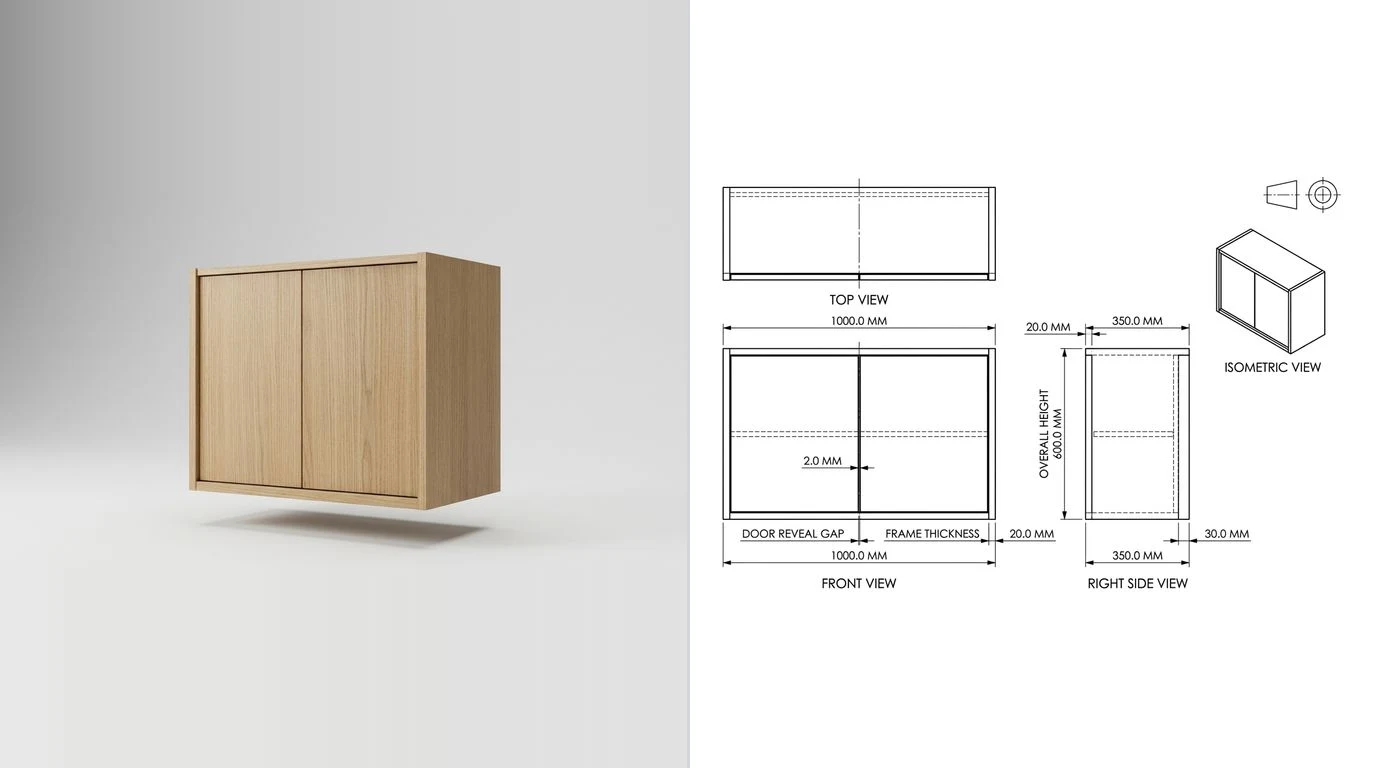
Manual vs AI-assisted: the numbers
The same $50 manufacturing-drawing gig, two ways
Same price to the buyer, same correct drawing delivered, a fraction of the time. That is the whole business case, and it is why the lazy "cheaper than a freelancer" framing misses the point. The smart freelancers are the ones using the tool.
The workflow, step by step
Here is a repeatable process you can run on a real order, from the client's photo to a deliverable you would happily put your name on:
- Get one measurement up front. When you accept the order, ask the client for a single caliper measurement of any feature, or the overall length. One number is all it takes to fix the scale, because a photo alone cannot reveal absolute size.
- Generate the geometry. Upload the photo to TechDraw AI and let it produce the views, the feature recognition and the dimension placement.
- Anchor the scale. Enter that one measured reference. It propagates through the whole drawing and removes the ambiguity.
- Verify what carries intent. Confirm or correct the dimensions and tolerances that matter, like fits, hole sizes and thread callouts. This is the expert step the client is buying.
- Export and deliver. Send a clean DXF for cutting plus a dimensioned PDF for humans. Add a title block and general tolerances (say, ISO 2768) so it reads as a real manufacturing drawing.
Where AI stops and you start
Be honest with yourself and your buyers about the limit, because that limit is also your moat. A single photograph cannot reveal a part's absolute size. That is projective geometry, not a software flaw. A 40 mm bracket up close and a 400 mm bracket far away can produce identical pixels. A photo also can't see hidden bores, design intent (a press fit versus a slip fit), or the difference between an M8×1.25 and an M8×1.0 thread.
That is good news for a freelancer. It means the job is not push-button, so the value of a competent human who anchors the scale and confirms the tolerances does not vanish. It concentrates. AI takes away the tedious hours, and you keep the part that needs judgment, which is the part worth paying for. It is also why shops accept AI-assisted drawings when the content is right, and why you should never ship a one-click output without checking it.
How much you can actually earn
Run the arithmetic without the hype. Say you offer a $40 conversion gig and a $90 manufacturing-drawing gig. By hand, a focused freelancer might finish three or four drawings a day. With AI doing the geometry, the same person can verify and deliver several times that, without working longer or cutting corners. The freelancers who deliver accurate, verified results and respond fast are the ones who climb to higher-priced gigs and repeat buyers.
For context on what the market actually pays per drawing, see our breakdown of what a technical drawing costs and whether you need to be an engineer to make one. The short version is that the work is real, the rates are fair, and the single biggest lever on your income is how fast you can deliver a drawing you are willing to stand behind. It also helps to understand how buyers weigh you against the alternative, covered in AI vs hiring a draftsman.
Fiverr sells your time. If you would rather build something that keeps earning between orders, the same skills turn into a product: making and selling laser-cut files on Etsy turns one design into a download you can sell many times over, and how to sell DXF files online does the same for the CAD side, where the buyers are shops and makers rather than crafters.
Frequently asked questions
Can you really make money on Fiverr with CAD and technical drawings?
Yes. It is one of the steadier technical niches on the platform. Search Fiverr for 'CAD drawing', 'image to CAD' or 'DXF' and you will find active gigs priced from $5 for a simple sketch-to-CAD conversion up to $100 or more for cleaning old drawings into AutoCAD. The demand comes from machine shops, product designers, laser cutters, and people who have a part but no drawing. The hard part is not finding work. It is delivering fast enough to take more of it.
How much do CAD freelancers charge?
Freelance drafting tends to run somewhere around $50 to $100 per hour. On Fiverr that shows up as fixed gig prices of roughly $5 to $30 for simple 2D conversions and $50 to $150 or more for multi-view manufacturing drawings or reverse-engineered parts. The real ceiling on your income is throughput. At a fixed price per drawing, anything that shortens delivery time pushes your effective hourly rate straight up.
Is using an AI tool on a Fiverr gig allowed?
Fiverr allows AI-assisted work as long as you deliver real value and stay honest about how you work. Using a tool like TechDraw AI to generate the geometry and then verifying the dimensions and tolerances yourself is no different from a drafter reaching for AutoCAD or SolidWorks instead of a pencil. What you sell is a correct, manufacturable drawing. The tool that gets you there faster is simply your edge.
Can AI turn a customer's photo straight into a sellable technical drawing?
It can produce the geometry, the views and the dimension placement in minutes. What it cannot do is read a part's absolute size from one photo, and no honest tool pretends otherwise. You anchor the drawing with one caliper-measured reference dimension and confirm the tolerances that carry design intent. That verification step is exactly the expertise the client is paying you for.
What file formats do Fiverr CAD clients usually want?
DXF and DWG are the most requested for 2D work, because they open in almost every CAD and CAM package and drive laser cutters and CNC routers directly. PDF is common when the client wants a human-readable drawing, and STEP shows up for 3D. Delivering a clean DXF plus a dimensioned PDF covers the large majority of buyers.